Can You Take Knitting Needles on a Plane?
Traveling with knitting needles can be confusing, especially for newer travelers. Many wonder if needles are allowed through airport security or need special cases for safety. With some planning, knitting on the go is possible.
With some planning, knitting on the go is possible. Before your trip, choose a small project for the flight. Items like scarves, hats, or socks are easy to pack and use in limited airplane space.
Also Read: How Long Does It Take to Knit a Scarf? Time Guide
Can You Take Knitting Needles on a Plane?
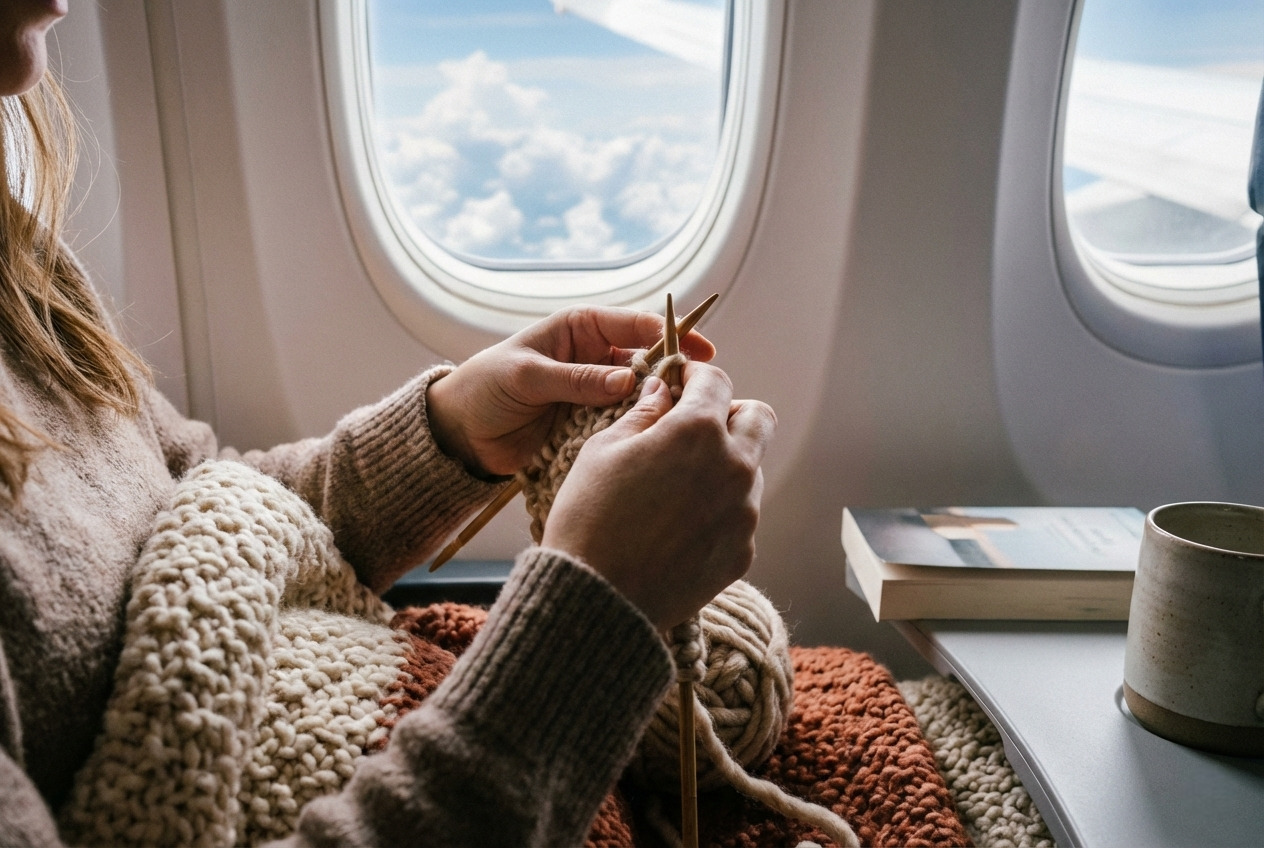
Knitters often ask: Can you take knitting needles on a plane? Generally, yes—especially within the United States. TSA allows knitting needles in both carry-on and checked bags, so you can work on projects in flight.
However, the key to a smooth travel experience is understanding specific knitting needle carry-on policies for airplanes, packing smartly, and being aware of international variations if flying abroad.
Whether your needles are metal, wooden, or plastic, this comprehensive guide covers everything you need to know about traveling with knitting needles.
TSA and Domestic Flight Regulations for Knitting Needles
The TSA allows knitting needles on a plane—including metal, wood, bamboo, and plastic—and crochet hooks in both carry-on and checked bags on U.S. flights. While TSA guidelines are generally flexible, security officers still have the authority to examine your tools more closely if needed.
Keeping your needles organized in a protective case helps minimize delays during screening. Unlike scissors or blades, knitting needles are not classified as high-risk items, so they are usually cleared without issue. For peace of mind and easier screening, choose bamboo or plastic needles, as they typically attract less attention from security.
Structured Packing Checklist for Traveling with Knitting Needles
Packing knitting supplies for air travel requires intention. A well-organized kit reduces the likelihood of security delays and protects your tools during transit. Use this checklist before every flight:
Carry-On Packing Checklist
Items Best Placed in Checked Baggage
Preparing your kit this way minimizes scrutiny and ensures quick passage through airport security.
International Flight Rules: Variations by Country and Airline
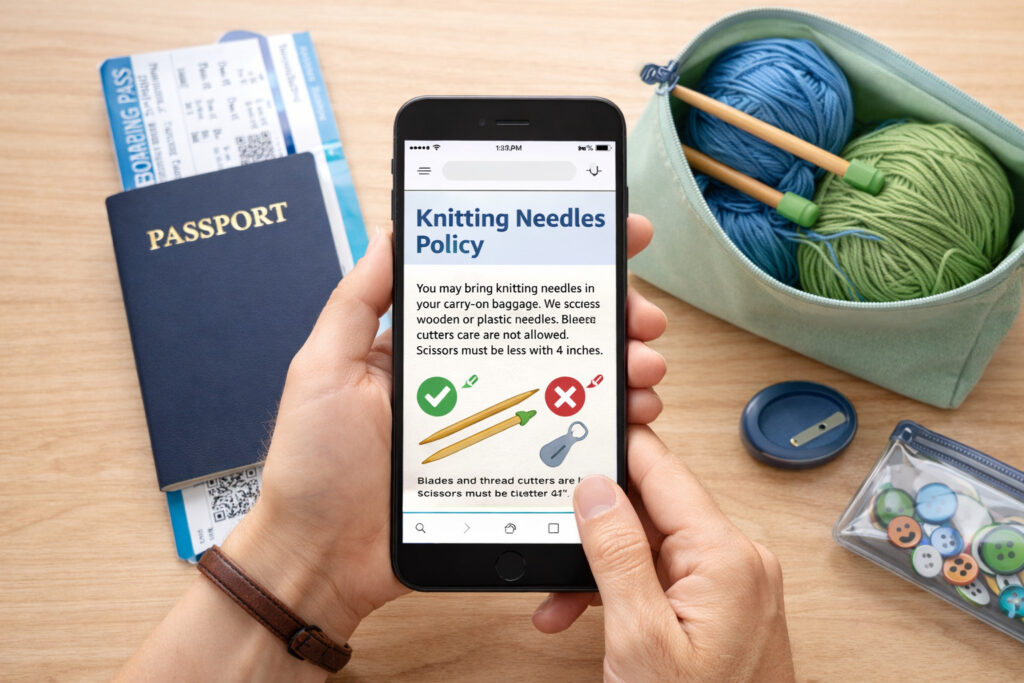
Flying internationally with knitting needles requires extra preparation, as security regulations vary by country and airline. While many European airports follow policies similar to the TSA and allow knitting needles—particularly those made of wood or plastic—some restrict metal needles or limit needle length. In contrast, several Asian airports apply stricter rules and may prohibit knitting needles in carry-on bags altogether.
Before traveling, review the knitting needle policies of both your airline and the security authorities at your departure and arrival airports. Some airlines, such as British Airways, clearly permit knitting needles onboard, while others enforce additional safety restrictions.
If the rules are unclear or vary by region, packing your needles in checked luggage is the safest option. With a bit of research and preparation, you can avoid delays, prevent confiscation, and enjoy a stress-free travel experience.
Regional Overview of Knitting Needle Rules
United States (TSA)
United Kingdom & EU
Canada
Australia & New Zealand
Parts of Asia (Japan, China, Southeast Asia)
Latin America
Best Practice for International Travel
International compliance depends less on official rules and more on local enforcement, making preparation essential.
Types of Knitting Needles and Materials Allowed on Planes
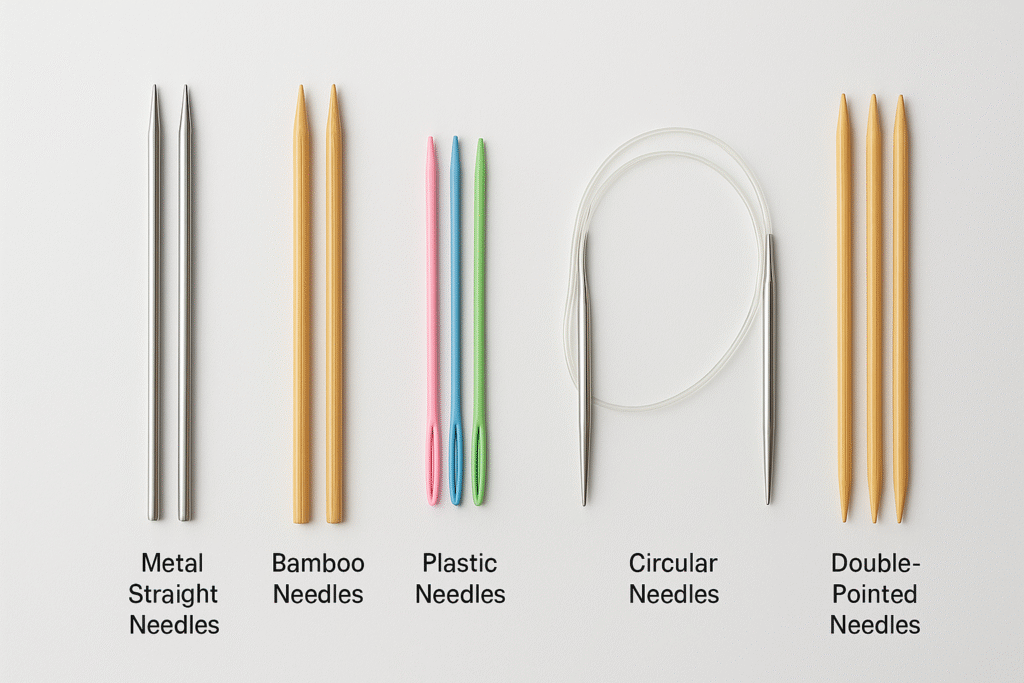
When preparing to take knitting needles on a plane, choose materials and designs that pass through security smoothly. Although metal knitting needles are typically allowed, they may receive extra scrutiny due to their rigid, pointed appearance. To avoid this, opt for wooden, bamboo, or plastic needles, which are viewed as less threatening and tend to move through screening with fewer questions.
Shorter needles are ideal for carry-on bags since they appear less sharp and are easier to pack. Circular needles are especially convenient for flights—they’re compact, flexible, and less likely to draw concern compared to long straight needles. Double-pointed needles and interchangeable sets can also be brought on board as long as they’re stored neatly in protective cases.
TSA usually allows taking knitting needles on a plane, but check airline guidelines for international trips. Pack needles carefully to prevent damage and avoid security delays.
Also Read: How to Measure Circular Knitting Needles? Beginners Guide
Tips for Packing and Traveling with Knitting Needles
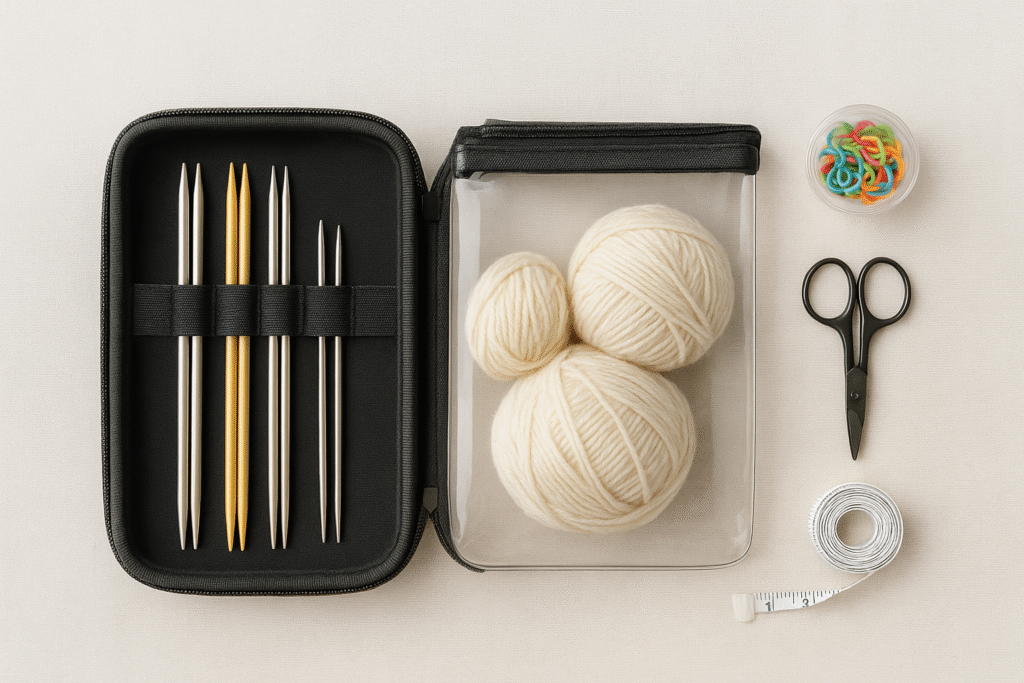
- Use a protective case to store your knitting needles and accessories. Hard or padded cases offer the best protection and reduce the chance of security concerns.
- Organize supplies in a clear project bag to help TSA officers quickly identify your knitting tools during screening.
- Flatten circular needles or disassemble interchangeable sets to make them more compact and less likely to be flagged.
- Pack sharp or long needles in checked baggage if possible, especially when flying internationally or on airlines with stricter rules.
- Carry a backup pair of smaller or more flexible needles in your personal bag in case your primary set is subjected to additional screening.
- Label your knitting kit so officers can easily distinguish craft tools from prohibited items.
- Store accessories separately, such as stitch markers, measuring tapes, or scissors that meet TSA blade limits, to avoid clutter and prevent delays.
- Review TSA rules and airline-specific policies before packing to ensure your materials comply with current regulations.
- Keep your active project on the needles whenever possible to demonstrate the tools’ purpose during inspection.
- Remain calm, cooperative, and respectful during security checks to help officers process your items quickly and smoothly.
Also Read: How to Count Rows in Knitting: A Complete Guide
What to Do if Your Knitting Needles Are Confiscated
Although knitting needles are typically allowed, airport officers may still confiscate them during screening. If this happens, stay calm and politely ask the agent to explain the reason for removal. Showing a printed or digital copy of the knitting needles, TSA rules, or your airline’s policy often helps resolve the issue quickly.
If the needles cannot be returned, ask whether you can mail them home or have them placed in checked baggage before you board.
To avoid interrupting your project, keep a backup pair of smaller or less noticeable needles in your carry-on. This simple step ensures you can continue knitting even if your primary set is taken. Preparing for this rare situation keeps your trip stress-free and allows you to enjoy your craft wherever you travel.
Understanding that can you take knitting needles on a plane beforehand gives you confidence and ensures you’re ready for any scenario.
Also Read: How to Add New Yarn to Knitting? Step-by-Step
Alternatives to Carrying Traditional Knitting Needles on Flights
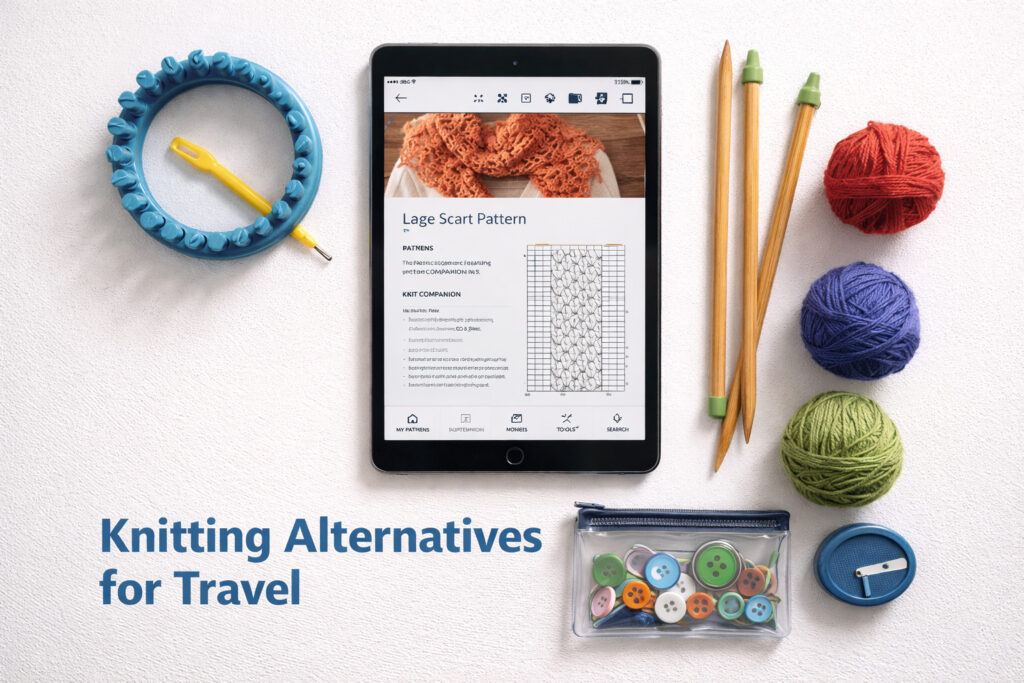
If security restrictions make transporting traditional knitting needles challenging, consider these alternatives to carrying knitting needles on a flight. These options help you continue your knitting projects without violating airline rules or risking confiscation:
By adopting these alternatives, you can enjoy your craft while traveling while remaining fully compliant with TSA rules, airline policies, and international flight regulations.
Also Read: Can You Knit Stuffed Animals? Quick Easy Guide
FAQs: Can You Take Knitting Needles on a Plane?
Conclusion: Best Practices for Traveling with Knitting Needles
Traveling with knitting needles requires preparation, awareness of TSA rules, and adherence to airline-specific policies. Many knitters ask, Can You Take Knitting Needles on a Plane? The answer is yes—you can carry knitting needles on planes in both carry-on and checked bags, with most U.S. domestic flights allowing them under TSA regulations. For international travel, it’s essential to research airline policies and the security rules of your destination country to avoid delays or confiscation.
To make traveling with knitting needles easier:
Choose compliant materials: Bamboo, plastic, or wooden needles are less likely to attract scrutiny at security checkpoints.
Opt for travel-friendly designs: Circular or interchangeable needles are compact, flexible, and convenient for flights.
Pack needles safely: Use protective cases and organize your kit in clearly labeled project bags for easy inspection.
Consider checked baggage for larger tools: Long, sharp, or metal needles are safer in checked luggage when permitted.
Have alternatives ready: Small backup needles, knitting looms, or digital knitting patterns allow you to continue projects if your primary needles are questioned.
By following these best practices, carrying knitting needles on a plane becomes stress-free, whether for domestic flights or international flights. Proper planning ensures your tools arrive safely and lets you enjoy knitting during your journey, wherever it takes you.
Also Read: What Size Needles for Beginner Knitting: 6 Easy Tips