Does Slip Knot Count as First Stitch Knit?
If you’re new to knitting, few questions cause more confusion than this one: Does a slip knot count as first stitch knit? You make a neat little loop, slide it onto your needle, and then begin casting on—so it feels logical to assume that loop must be a stitch. Yet knitters, patterns, and tutorials often seem to disagree, leaving beginners unsure whether they’re starting correctly.
The truth is simple but nuanced. In most knitting situations, a slip knot does not count as the first stitch, even though it sits on the needle like one. Depending on the cast-on method, pattern instructions, or personal style, there are a few exceptions worth knowing. This mix of consistency and flexibility is why the question comes up so often.
In this guide, you’ll find a clear, practical explanation based on real knitting practice. We’ll explore what a slip knot does, how it differs from true cast-on stitches, when it might be counted, and how to avoid common stitch-count mistakes. By the end, you’ll know how to start any project confidently, with clean edges and accurate stitch counts.
Introduction to Slip Knot in Knitting
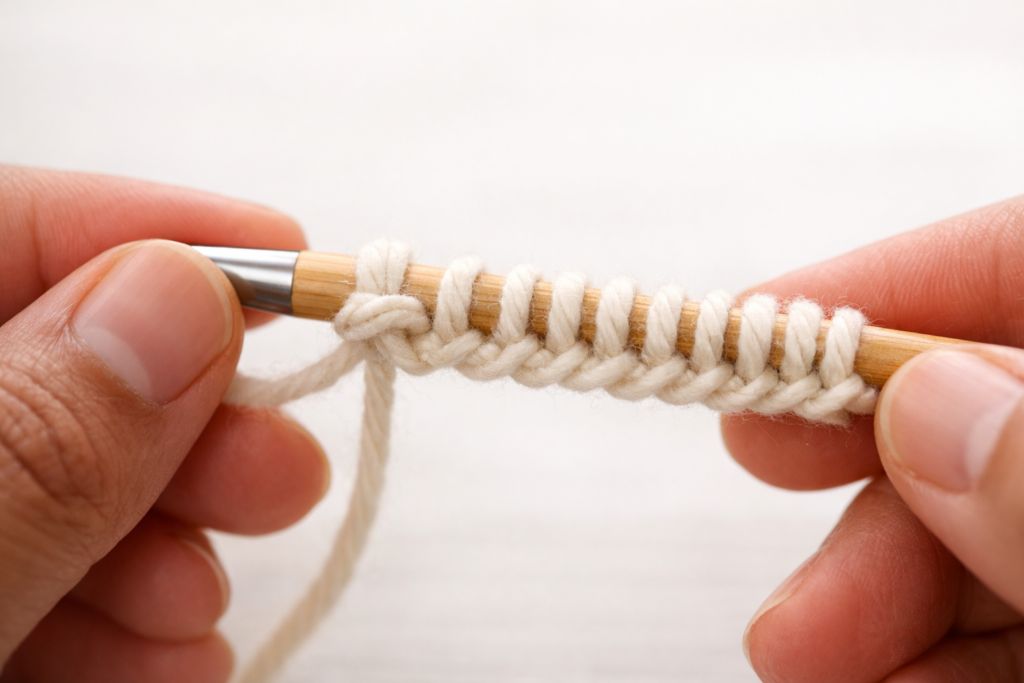
A slip knot is usually the first loop placed on a knitting needle before casting on stitches. It acts as a temporary anchor, holding the yarn in place while you form the foundation stitches. Adjustable by design, it tightens or loosens easily, letting you control tension from the start.
For beginners, the slip knot plays an important supporting role:
Despite its appearance, the slip knot serves a different purpose than the stitches that follow. It is a starting loop, not a structural stitch, which is why it’s often excluded from the official stitch count. This subtle distinction between a loop that helps you begin and stitches that form the fabric is the root of much of the confusion.
Does slip knot count as first stitch knit? This is one of the most common questions beginners ask. The answer depends on your cast-on method. In most cases, the slip knot does not count as a stitch in your final count because it’s removed or absorbed into the edge.
However, with some methods like the cable cast-on, the slip knot may be worked as the first stitch. Always check your pattern instructions or count your stitches after casting on to be sure.
Understanding this early on can prevent uneven edges, accidental extra stitches, and frustration when patterns don’t seem to line up. Once you know how the slip knot fits into the bigger picture, counting stitches becomes far more intuitive.
Also Read: How Do You Make a Slip Knot for Knitting? Easy Guide
Does Slip Knot Count as First Stitch? (The Answer Explained)
So, does slip knot count as first stitch knit?
In most cases, the answer is no.
In standard hand knitting, the slip knot is not included in the number of stitches you cast on. When a pattern says to cast on 20 stitches, it expects you to make 20 cast-on stitches after placing the slip knot on the needle, not to count the slip knot itself.
This distinction exists because the slip knot serves a different role from the stitches that create the fabric.
Why the Slip Knot Usually Does Not Count
Technically, the slip knot acts as a temporary anchor, not a structural stitch. Experienced knitters and most pattern designers treat it this way for several reasons:
Because of these factors, counting the slip knot can introduce inconsistencies, especially in projects that need precise stitch numbers, such as garments or patterned work.
Why Conflicting Advice Exists
Some knitters knit directly into the slip knot and treat it as a stitch, especially with certain cast-on methods or personal techniques. This can make the slip knot look like other stitches, which explains the mixed advice in tutorials and discussions.
However, this approach reflects individual method preference, not a universal knitting standard.
Rule of Thumb
Unless a pattern explicitly instructs you to count the slip knot, it should not be included in your stitch count.
Following this guideline matches industry-standard patterns, prevents extra stitches, and ensures consistent, professional results, especially for beginners learning to read and follow knitting instructions.
Step-by-Step: Making a Slip Knot That Counts (When Needed)
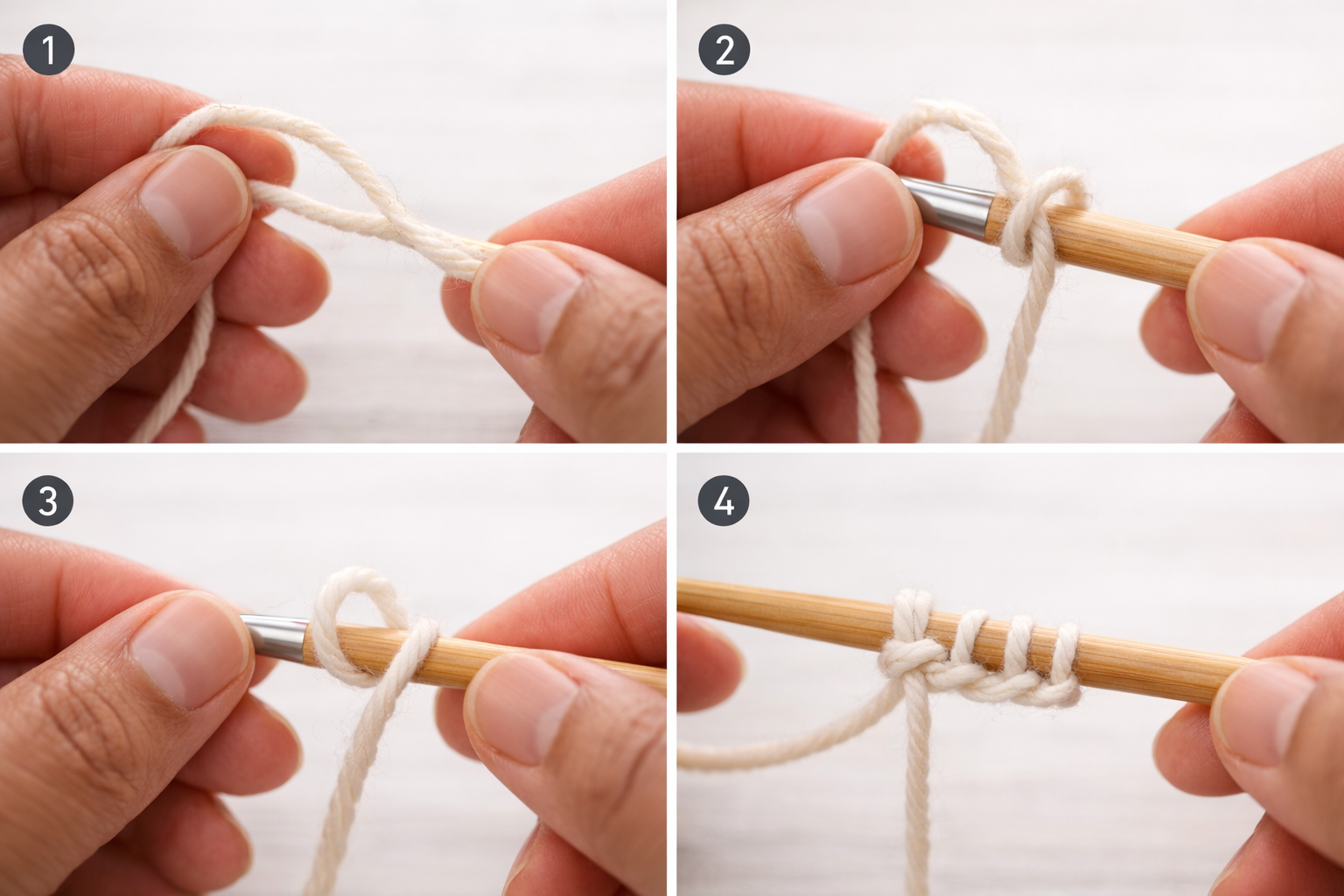
Although most knitting projects do not require counting the slip knot, there are situations where a knitter may choose to work into it as a regular stitch. When that approach is used, the slip knot must be made neatly and with even tension so it blends smoothly into the fabric and does not distort the edge.
The slip knot count becomes relevant when your pattern specifies whether to include it in your total stitch number, so always verify after casting on that you have the correct count on your needle.
The following method creates a clean, controlled slip knot suitable for either approach.
How to Make a Clean Slip Knot
1. Make a loop
Lay the yarn across your palm, allowing the tail end to cross over the working yarn to form a loose loop.
2. Pull through
Reach through the loop and draw the working yarn through, forming a new adjustable loop.
3. Tighten gently
Place the loop on your needle and pull both the tail and working yarn just enough to snug the knot. The loop should slide easily onto the needle—avoid fully tightening it.
4. Decide how it will be used
Tip: A slip knot that is pulled too tight can shrink or distort the first stitch, creating an uneven edge. Aim for relaxed, consistent tension.
Also Read: How to Cast on Knitting with Two Needles: A Complete Guide
Slip Knot vs. Other Cast-On Methods
Whether a slip knot is counted depends largely on the cast-on method being used. Understanding how it functions within each technique helps eliminate confusion.
Long-Tail Cast On
One of the most widely used cast-on methods, especially for beginners.
Some knitters choose to count it, but many drop or remove it later to achieve a smoother edge.
Also Read: How to Do a Long Tail Cast On Knitting? Easy Guide
Knitted Cast On
Stitches are built one at a time using a knit motion.
Cable Cast On
A firmer variation of the knitted cast-on.
Backward Loop (Thumb) Cast On
A quick, stretchy method often used for adding stitches mid-project.
Cast On Without a Slip Knot
Some knitters omit the slip knot entirely and form the first stitch directly on the needle.
Bottom line: In the majority of cast-on methods, the slip knot functions as a setup step rather than part of the official stitch count.
Why Counting the Slip Knot Matters
It may seem minor, but counting—or not counting—the slip knot can significantly affect the outcome of a project.
Accurate stitch counting matters because it affects:
Many common beginner issues—unexpected extra stitches, uneven edges, or patterns that appear incorrect—can often be traced back to counting the slip knot unintentionally.
Slip Knot vs. Cast-On Stitch: What’s the Difference?
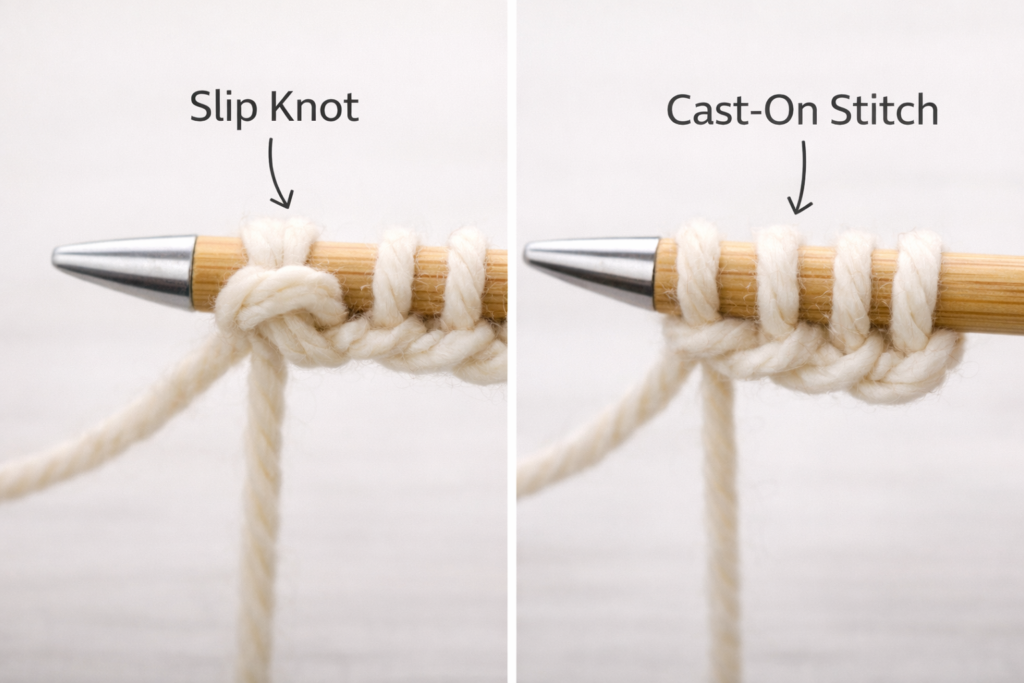
Although they may look similar on the needle, slip knots and cast-on stitches serve distinct purposes.
Slip Knot
Cast-On Stitch
Think of the slip knot as the helper that allows you to begin, while cast-on stitches are the true building blocks of your knitting.
What Do Knitting Patterns Usually Expect?
Most knitting patterns follow a standard convention: the slip knot does not count as a stitch unless the pattern explicitly says so.
When a pattern states:
Cast on 40 stitches.
It almost always means:
If a designer wants the slip knot included, they will typically specify this directly, using wording such as:
Count the slip knot as the first stitch.
If no such instruction appears, the safest and most widely accepted approach is to leave the slip knot out of your count.
Helpful tip: After casting on, count the loops on your needle. If you see one more loop than the pattern requires, the extra loop is usually the slip knot.
Also Read: How to Read Knitting Patterns? Beginners Guide
Common Slip Knot Mistakes (and How to Fix Them)
Even experienced knitters occasionally run into slip knot issues. Since the slip knot sits at the start of a project, small mistakes can affect stitch count, edge appearance, and accuracy. Below are the most common problems and how to correct them.
Mistake 1: Always Counting the Slip Knot
Many knitters assume the slip knot automatically counts as the first stitch.
Fix: Count the slip knot only if the pattern instructs you to. Otherwise, start counting stitches after the slip knot.
Mistake 2: Leaving the Slip Knot in the Finished Edge
In some cast-on methods, the slip knot can create a visible bump or irregularity along the edge.
Fix: If you are not counting it, drop the slip knot off the needle at the start or end of the first row and remove it by pulling the tail.
Mistake 3: Making the Slip Knot Too Tight
A tight slip knot can shrink or distort the first stitch, causing uneven tension at the edge.
Fix: The slip knot should be snug but adjustable. You should be able to slide it along the needle without resistance.
Mistake 4: Confusing the Slip Knot with a Cast-On Stitch
This is common with the long-tail cast-on, where the slip knot closely resembles other loops.
Fix: Count carefully after casting on. The slip knot often looks slightly different or sits at a different angle than the true cast-on stitches.
Also Read: How to Count Rows in Knitting: A Complete Guide
Mistake 5: Switching Methods Mid-Project
Counting the slip knot on one project and ignoring it on another without intention can lead to inconsistent results.
Fix: Choose one approach per project and follow it from cast-on through finishing.
Should You Knit Into the Slip Knot or Drop It?
This decision depends on both pattern instructions and personal preference.
If you are not counting the slip knot:
Drop it from the needle and remove it before or during the first row.
If you are counting the slip knot:
Knit into it like a standard stitch and maintain even tension.
Many knitters prefer to drop the slip knot for a smoother, cleaner edge, especially on scarves, blankets, and garments with visible borders.
Best practice: Knit a small swatch using both methods to see which edge finish you prefer.
Also Read: How to Knit a Gauge Swatch: Quick Guide
Advanced Tips for Precise Slip Knot Counting
Once you understand when the slip knot does—and does not—count as a stitch, precision becomes the next goal. Experienced knitters focus on consistency, tension control, and edge integrity rather than habit alone.
Use Provisional Slip Knots for Clean Transitions
For projects that require seamless joins, such as shawls, flat-knit scarves joined, or modular designs, consider using a provisional slip knot with waste yarn. This allows you to remove the knot later without disrupting the stitch structure, resulting in a smoother edge and a more professional finish.
Evaluate Edge Accuracy Visually
Photographing your cast-on edge periodically—especially during longer projects—can reveal subtle issues that are easy to miss while knitting. Comparing these images to your gauge swatch helps confirm whether your slip knot treatment matches your intended stitch tension and alignment.
Maintain Consistent Tension Records
Advanced knitters often note tension behavior by yarn type and fiber. A slip knot that works well with wool may behave differently with cotton, linen, or silk blends. Keeping brief project notes helps refine technique over time and prevents recurring edge inconsistencies.
Circular Knitting Considerations
In circular knitting, the slip knot serves as a temporary anchor rather than a functional stitch.
Best practice:
Counting the slip knot in circular knitting often creates a weak point or visible gap at the join. Precision comes from a clean join—not an extra loop.
Also Read: How to Join in Round in Knitting: Comprehensive Guide
Troubleshooting Slip Knot Tension and Gauge
Tension issues at the slip knot are a common source of early-row distortion. Fortunately, they are easy to diagnose and correct.
Problem: Edge Looks Like a Dropped Stitch
Uneven tension at the slip knot can mimic a dropped or elongated stitch.
Solution: Gently block the finished piece after washing. Minor inconsistencies at the cast-on edge often relax and even out once the fibers settle.
Also Read: How to Block a Knitted Scarf: 5 Easy Steps
Problem: Cast-On Edge Too Tight
If the slip knot and first stitches feel rigid or pull inward, your tension is likely too tight.
Solutions:
- Use a needle one size larger only for the cast-on row
- Relax the slip knot so it slides freely on the needle
- Re-watch, including the slip knot and full cast-on row
Yarn Weight Matters
Heavier yarns tolerate looser slip knots without visual issues, while lighter yarns (such as fingering or lace weight) exaggerate tension differences.
Rule of thumb: The finer the yarn, the more important relaxed, even slip knot tension becomes.
Also Read: Best Yarn for Blanket Knitting| Expert Guide 2025
Professional Standard to Remember
The slip knot is a setup tool, not a structural stitch—unless a pattern explicitly instructs otherwise. Precision in counting, tension, and consistency at the cast-on edge is what separates casual knitting from expert-level results.
FAQs About Does Slip Knot Count as First Stitch Knit?
Conclusion
Understanding whether a slip knot counts as the first stitch in knitting is a small detail that makes a significant difference in accuracy, edge quality, and confidence. The professional standard is clear: in most knitting patterns and cast-on methods, the slip knot does not count as a stitch unless the designer explicitly states otherwise. This directly answers the question Does Slip Knot Count as First Stitch Knit?
The slip knot’s role is functional, not structural. It anchors the yarn, helps establish tension, and allows you to begin casting on, but it is not meant to be part of the finished fabric in most cases. Treating it as a setup step rather than a counted stitch aligns your work with industry conventions, prevents off-by-one errors, and produces cleaner, more consistent edges.
While there are situations where a slip knot may be worked into as a stitch, those are deliberate choices tied to specific methods or personal technique—not the default rule. When in doubt, follow the pattern instructions exactly. If no guidance is given, exclude the slip knot from your stitch count.
Mastering this concept early eliminates one of the most common sources of beginner frustration and supports better results as projects become more complex. Precision at the cast-on edge sets the tone for everything that follows. Knowing how to handle the slip knot correctly is a foundational skill every knitter should have.
Also Read: How to Finish a Knitting Project: A Complete Guide