Top 10 Best Knitting Patterns for Beginners: Easy Guide
Finding the best knitting patterns for beginners can feel overwhelming when you’re just starting. The right pattern builds confidence, teaches essential stitches, and helps you actually finish your first projects. In this guide, you’ll discover easy beginner knitting patterns, core stitch techniques, and proven starter projects that work.
We also review beginner-friendly knitting pattern books and kits designed to guide new knitters step by step—helping you learn faster, avoid common mistakes, and enjoy knitting from your very first stitch.
Overview of Easy Beginner Knitting Projects
The best knitting patterns for beginners have a few key things in common: they are simple to make, use basic stitches, and repeat the same steps. These qualities help new knitters learn the main skills without having to constantly check the instructions. Projects that follow a clear pattern help build confidence, make stitches more even, and make it easier to notice and fix mistakes early.
Also Read: How to Fix a Knitting Hole: Easy 5 Techniques and Tips
Scarves
Scarves are one of the best projects for beginners. Their straight shape and adjustable length make them great for practicing knit and purl stitches without worrying about shaping. Scarves help beginners learn to keep their stitches even and steady while making something they can wear.
Hats
Hats for beginners teach shaping in easy steps. Most patterns use simple ribbing for the edge and slowly reduce stitches at the top, so hats are a good next project after flat pieces. They teach important skills without being too hard for new knitters.
Blankets
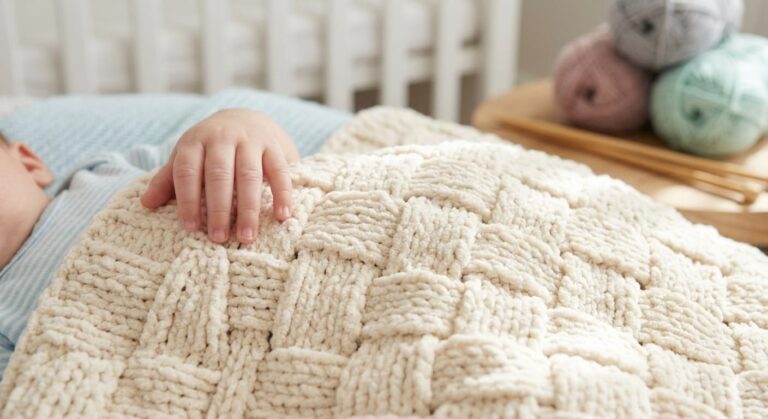
Blankets, especially chunky knit blankets, are excellent for beginners who want fast, visible progress. Bulky yarn and larger needles make stitches easy to see and count, reducing errors and increasing confidence.
Most beginner projects rely on garter stitch, stockinette stitch, and simple ribbing, making them approachable while reinforcing essential knitting skills that carry into more advanced patterns.
Essential Beginner Knitting Patterns
The best knitting patterns for beginners are those that teach core skills clearly while producing satisfying results. These foundational patterns recur in successful beginner projects because they are forgiving, practical, and easy to understand.
Garter Stitch Scarf
The garter stitch scarf is widely considered the best knitting pattern for beginners. By knitting every row, beginners create a flat, reversible fabric that does not curl at the edges, eliminating one of the most common early frustrations.
Why this pattern works so well:
This pattern helps beginners focus on tension, stitch consistency, and rhythm without complicated instructions or shaping.
Also Read: What is Garter Stitch in Knitting? Easy Knitting Explained
Stockinette Stitch Dishcloth
A stockinette stitch dishcloth introduces the purl stitch in a small, manageable project. Dishcloths are quick to finish, useful around the home, and ideal for understanding how knit and purl stitches interact to form fabric.
Skills you’ll learn:
Because dishcloths are small, mistakes are easier to fix and far less discouraging.
Also Read: How to Fix a Dropped Stitch: A Complete Guide for Knitters
Chunky Knit Blanket
Chunky knit blankets are among the most rewarding beginner knitting projects. Thick yarn and large needles make fast progress and clearly defined stitches, helping beginners stay confident and motivated.
Why beginners love this pattern:
Chunky blankets are especially effective for visual learners and those completely new to knitting, making them a staple in beginner-friendly pattern collections.
Top 10 Best Knitting Pattern Books for Beginners
Below are the best knitting patterns for beginners, including detailed tutorials, step-by-step guides, and pattern ideas to get you started. Each book is beginner-friendly but also grows with your skills.
1. Knit Stitch: 50 Knit + Purl Patterns — Best Beginner Knitting Texture Guide

Knit Stitch: 50 Knit + Purl Patterns is a treasure trove for knitters eager to grow their skills with just the basics. Inside, you will find 50 textured patterns, each with easy-to-follow instructions and charts, ready for both flat and circular knitting. The collection starts with simple two-row repeats and gradually introduces more intricate designs, encouraging beginners to discover new textures and gain confidence along the way.
While it does not offer complete beginner projects or detailed lessons, this book is the perfect companion to your favorite best knitting patterns for beginners, adding flair and excitement to even the simplest knits.
The author’s video tutorials offer extra support for visual learners, making the experience even more accessible. The layout is clear and inviting, making it a joy to use. This book is a fantastic resource for anyone who dreams of creating textured, polished knits without needing advanced techniques.
Pros
Cons
2. Vogue® Knitting: The Ultimate Knitting Book — Best Long-Term Knitting, Pattern Reference

This book is a treasure trove for knitters, offering a detailed reference instead of a typical beginner’s guide. With more than 800 stitch patterns, it encourages readers to explore how stitches work and how they translate into real projects.
The clear charts and explanations help readers understand pattern structure, customize designs, and confidently use the best knitting patterns for beginners once the basics are learned.
Because it doesn’t include step-by-step beginner projects, complete newcomers may find the amount of information overwhelming at first. It works best as a companion rather than a standalone learning book.
Overall, it’s a strong long-term resource for knitters who already know knit and purl and want to grow their skills with confidence.
Pros
Cons
3. 400 Knitting Stitches — Best Visual Stitch Dictionary for Beginners

400 Knitting Stitches is a treasure trove for knitters eager to add variety and texture to their work. Inside are over 400 stitch patterns, from classic knit-purl blends to intricate cables, delicate lace, and playful slipped stitches. Each stitch includes clear categories, easy-to-follow instructions, detailed charts, and vibrant full-color photos that help you picture every pattern on your needles.
Although it is not project-based and does not provide step-by-step beginner instructions, it is an excellent companion for those working with the best knitting patterns for beginners, helping knitters add flair and texture to simple projects.
This stitch dictionary is great to keep on hand for trying new ideas, learning more knitting skills, and making clothes, accessories, or home items with confidence. It is a useful visual tool for knitters who want to try different stitches without a full pattern.
Pros
Cons
4. The Complete Photo Guide to Knitting — Best Visual Knitting Tutorial Book

The Complete Photo Guide to Knitting is a comprehensive visual reference that covers essential skills, from basic stitches to advanced techniques. Step-by-step photos clarify cables, Fair Isle, lace, and intarsia, and the guide explains yarn types, gauge, and fiber selection to support informed decisions.
While it is not project-focused and offers only a few complete beginner projects, it serves as an excellent companion to the best knitting patterns for beginners, providing visual guidance and clarity for learning foundational skills.
This guide is ideal for knitters who learn best through images and want a deeper understanding of techniques to improve their projects. Its clear illustrations and practical advice make it a valuable long-term resource for enhancing knitting confidence, experimenting with textures, and supporting ongoing skill development alongside beginner-friendly patterns.
Pros
Cons
5. First Time Knitting — Best Knitting Starter Book for Absolute Beginners

This book is designed specifically for people who have never knitted before. It teaches through small, manageable projects, guiding readers from casting on to finishing simple items like scarves and hats. The instructions are clear and well illustrated, making the learning process approachable and helping beginners feel confident as they work through the best knitting patterns for beginners.
The main drawbacks are that there are only a few projects and that it does not cover more advanced skills. After learning the basics, many knitters will need another book to keep getting better.
Overall, it’s a strong starting point for absolute beginners who want structure, clarity, and a stress-free introduction to knitting.
Pros
Cons
6. My First Knitting Book — Best Budget Beginner Knitting Guide

This affordable guide combines basic instruction with beginner projects, making it a practical option for new knitters. The lessons are straightforward and build skills gradually through hands-on practice, helping readers confidently work through the best knitting patterns for beginners.
The layout and photos feel more traditional than those in newer books, which may not appeal to visual learners. Still, the instruction itself is clear, reliable, and easy to follow.
Overall, it’s a solid, budget-friendly introduction for beginners who value clear teaching and practical projects over modern design.
Pros
Cons
7. Super Easy Knitting for Beginners — Best All-in-One Beginner Starter Book

Super Easy Knitting for Beginners is an accessible guide for anyone looking to start knitting with confidence. It offers clear, step-by-step, photo-illustrated instructions covering everything from basic stitches to reading patterns and choosing yarn. The book includes beginner-friendly projects such as scarves, baby blankets, shawls, and felted bags, making it perfect for those exploring the best knitting patterns for beginners.
The guidance is straightforward, concise, and practical, helping new knitters avoid common mistakes and build skills quickly. Troubleshooting tips, left- and right-handed knitting, and essential tools support a smooth learning experience.
On the downside, experienced knitters may find the book too basic, and those seeking advanced techniques or extensive stitch dictionaries may need a supplementary reference.
This book is an ideal starting point for new knitters who want structured, easy-to-follow instruction paired with fun, achievable projects.
Pros
Cons
8. 60 Quick Knits for Beginners — Best Book for Fast Beginner Projects

This book offers a collection of speedy, beginner-friendly projects that rely on basic stitches and straightforward construction. It is ideal for knitters who thrive on quick finishes and love seeing their progress unfold with each project.
With its diverse range of patterns, practice stays fresh and exciting, making it easy to build confidence and master essential skills as you explore the best knitting patterns for beginners.
However, the book provides only brief explanations of techniques, and some patterns assume familiarity with basic knitting terms. Pairing it with a more comprehensive guide can help beginners feel fully supported.
All in all, this book is a great pick for hands-on learners eager for quick successes as they steadily grow their knitting know-how.
Pros
Cons
9. My First Knitting Book (Dover) — Best Project-Based Beginner Guide

This book is a reassuring introduction for new knitters who want to build confidence through hands-on practice. It offers clear, easy-to-follow lessons and more than 15 simple projects that guide you from basic stitches to completed items.
For anyone exploring the best knitting patterns for beginners, this practical, project-oriented book helps you learn by doing instead of just reading.
The main downside is that it focuses on fundamental skills and projects, so knitters who quickly master the basics may soon want a deeper reference or more challenge. Still, the structure is easy to follow, and each project reinforces essential techniques in a satisfying way.
All in all, it’s a dependable choice for beginners who prefer step-by-step instruction and achievable project results.
Pros
Cons
10. Knitting for Beginners: The A-Z Guide–Emma Brown | Best Knitting Patterns for Beginners Comprehensive Guide
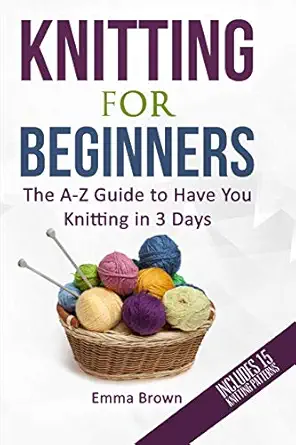
Knitting for Beginners warmly welcomes newcomers, leading you from your very first stitches to impressive projects with ease. With clear step-by-step instructions, color photos, and 15 ready-to-make patterns, it is an excellent resource for those seeking the best knitting patterns for beginners.
The book covers essential tools and supplies, basic stitches, techniques, and reading knitting charts. It includes detailed diagrams for 20 stitches and 12 techniques, plus guidance on advanced methods such as double-pointed knitting. Common mistakes, FAQs, and a glossary make it easy to reference as your skills grow.
Although the wealth of techniques and patterns might seem daunting at first glance, the book’s thoughtful structure gently builds your confidence, helping you create beautiful pieces in no time.
Pros
Cons
Top 10 Easy Knitting Patterns for Beginners
The best knitting patterns for beginners use simple shapes, repetitive stitches, and offer fast, visible progress. These projects build confidence and help you practice essential techniques like tension control, stitch consistency, and basic shaping. Below are 10 easy knitting patterns beginners can start today, with minimal frustration and maximum success.
Here’s a list of beginner-friendly patterns that are simple, satisfying, and rewarding:
1. Classic Scarf
Why it works: Straightforward rectangle, perfect for practicing knit stitches.
Tips: Experiment with garter or seed stitch for texture.
Time: 2–5 hours, depending on length and yarn.
Also Read: How Long Does It Take to Knit a Scarf? Time Guide
2. Dishcloth
Why it works: Small project, quick to complete, and great for experimenting with different stitches.
Stitches: Garter, seed, or checkerboard patterns
3. Coasters
Why it works: Tiny, forgiving patterns perfect for practicing stitch consistency.
Extra: Make them in different colors for a fun set.
4. Headband
Why it works: Small circumference, simple shapes, and a great introduction to knitting in the round.
5. Scrunchie
Why it works: Small, fun, and lets you practice circular knitting or basic sewing finishes.
6. Baby Blanket
Why it works: Uses repetitive stitches and helps beginners practice larger projects without complex shaping.
Also Read: Best Yarn for Blanket Knitting| Expert Guide 2025
7. Simple Beanie
Why it works: Introduction to circular knitting and decreases.
Also Read: Best Knitting Machines for Hats 2025: Buyer’s Guide
8. Fingerless Gloves
Why it works: Short rows and shaping are manageable at a beginner level.
9. Knit Bag
Why it works: Perfect for practicing flat panels, seam finishing, and functional design.
10. Soft Pillow Cover
Why it works: A small home decor project to apply stitch patterns and finishing techniques.
All these projects are ideal starting points. They offer variety and build confidence as you progress.
Beginner Knitting Stitches and Techniques
Knowing the basic stitches and techniques is important for doing well with the best knitting patterns for beginners. Learning these basics helps new knitters follow patterns easily, spot mistakes early, and make neat, even fabric.
Essential Knitting Stitches
Before starting any project, it’s essential to learn the core stitches found in the best knitting patterns for beginners. These foundational stitches appear in almost every project and help you build confidence, improve tension, and understand patterns more easily.
1. Garter Stitch (The Ultimate Beginner Stitch)
What It Is: Knit every stitch, every row.
Why It’s Perfect for Beginners: Creates a reversible, squishy fabric that doesn’t curl.
Best Used For: Dishcloths, scarves, baby blankets, washcloths
Garter stitch is the foundation of easy knitting patterns that beginners love because there is nothing simpler. You only need to know how to knit, with no purling required. The fabric lies flat, hides mistakes well, and looks the same on both sides.
How to Work Garter Stitch:
- Cast on your desired number of stitches
- Row 1: Knit all stitches
- Row 2: Knit all stitches
- Repeat Row 2 until your project reaches the desired length
- Bind off
The distinctive horizontal ridges form naturally as you knit every row. Two rows create one ridge, making it easy to count your rows.
Also Read: How to Cast Off Knitting Right: Easy Guide
2. Stockinette Stitch (The Classic Knit Fabric)
What It Is: Alternate rows of knit and purl.
Why Beginners Need It: Creates the smooth “knit” look you see in most sweaters.
Best Used For: Scarves (though edges curl), simple garments, learning purl stitches
Stockinette stitch looks professional and polished, with smooth V-shaped stitches on the front (knit side) and bumpy horizontal stitches on the back (purl side). The main challenge is that it naturally curls at the edges, so it is not ideal for scarves unless you add a border.
How to Work Stockinette Stitch (Flat Knitting):
- Cast on your stitches
- Row 1 (Right side): Knit all stitches
- Row 2 (Wrong side): Purl all stitches
- Repeat Rows 1-2
The key to stockinette is to alternate: knit the right-side rows, purl the wrong-side rows. Many beginners find it helpful to mark the right side with a safety pin until the pattern becomes automatic.
3. Seed Stitch (Texture for Beginners)
What It Is: Alternating single knit and purl stitches
Why It’s Great: Adds texture, lies flat, and is reversible
Best Used For: Scarves, borders, textured dishcloths, headbands
Seed stitch creates a beautiful, bumpy texture that does not curl, making it perfect for simple knitting patterns that beginners want to show off. It is slightly more complex than garter but still achievable.
How to Work Seed Stitch:
- Cast on an odd number of stitches
- Row 1: Knit 1, purl 1 repeat to last stitch, knit 1
- Row 2: Knit 1, purl 1 repeat to last stitch, knit 1
- Repeat Row 2
The pattern creates itself: you knit the purl bumps and purl the smooth V’s. Once you get the rhythm, seed stitch becomes automatic.
Also Read: How to Knit a Moss Stitch: Best Expert Guide
4. Ribbing (1×1 and 2×2)
What It Is: Vertical columns of knit and purl stitches
Why It Matters: Creates stretchy fabric for hat brims, cuffs, and edges
Best Used For: Hat brims, scarf borders, sock cuffs, sweater edges
Ribbing introduces you to combining knits and purls in the same row. The vertical columns create a stretchy, professional finish every knitter needs to know.
How to Work 1×1 Ribbing:
- Cast on an even number of stitches
- Row 1: Knit 1, purl 1 repeat across
- Row 2: Knit 1, purl 1 repeat across
- Repeat Row 2
How to Work 2×2 Ribbing:
- Cast on a multiple of 4 stitches
- Row 1: Knit 2, purl 2, repeat across
- Row 2: Knit 2, purl 2 repeat across
- Repeat Row 2
The secret: you always knit the knit stitches (the V’s) and purl the purl stitches (the bumps) as they face you. This creates the vertical columns.
Also Read: How to Join Circular Knitting? Beginner’s Guide
Tools and Materials Needed for Best Knitting Patterns for Beginners
The best beginner knitting patterns explain these techniques simply, repeat important steps, and guide knitters through each part without assuming they know anything before starting.
Also Read: Best Knitting Bags 2025: Ultimate Guide
How to Choose Beginner Knitting Patterns
Picking the right pattern is one of the most important things for new knitters. Beginner patterns should make learning easier, not harder.
When selecting patterns, look for:
Beginners should wait to try lace, cables, tricky color patterns, or clothes that need to fit well until they feel good about the basics. Starting with simple beginner patterns helps build confidence and provides a good foundation for later, harder knitting projects.
Also Read: How to Read Knitting Patterns? Beginners Guide
FAQs About Best Knitting Patterns for Beginners
Final Recommendation: Best Knitting Patterns for Beginners
After reviewing beginner-friendly knitting patterns, stitch techniques, project types, and top-rated books, a few clear winners stand out. These recommendations balance ease of learning, clear instruction, skill-building value, and real-world usability. They help you confidently choose the best knitting patterns for beginners without unnecessary complexity.
Best Overall Beginner Knitting Patterns
Super Easy Knitting for Beginners – Carri Hammett
This is the strongest all-in-one starting point. Step-by-step photo instructions, beginner projects like scarves and blankets, and support for both left- and right-handed knitters turn fundamentals into quick wins. Ideal for complete beginners who want structure and fast progress.
Best Beginner Knitting Patterns for Projects + Learning
Knitting for Beginners: The A-Z Guide – Emma Brown
A balanced mix of instruction and practice, this guide includes 15 beginner-ready patterns, clear diagrams, and essential techniques. It is a great choice if you want to learn while making projects and avoid common beginner mistakes.
Best Long-Term Reference for Beginners
Vogue® Knitting: The Ultimate Knitting Book
Best used after mastering knit and purl, this authoritative resource offers over 800 stitch patterns and clear charts. While not project-driven, it is invaluable for growing beyond basic beginner patterns and customizing your work long term.
Best Stitch Dictionary for Beginners
400 Knitting Stitches – Potter Craft
Perfect for adding texture to simple projects, this visual stitch dictionary helps beginners personalize scarves, dishcloths, and blankets without advanced skills required.
Best for Visual Learners
The Complete Photo Guide to Knitting – Margaret Hubert
A photo-heavy reference that clearly explains techniques and troubleshooting. It pairs well with beginner patterns and is useful for visual learners.
Start with a garter stitch scarf using worsted or bulky yarn and US 8–10 needles. Pair a simple pattern with one solid beginner book, practice consistently, and focus on finishing projects. With the right resources, mastering beginner knitting patterns is achievable and rewarding.