Is Knitting or Crocheting Easier? Simple Guide
If you’ve ever stared at a ball of yarn, wondering is knitting or crocheting easier, you’re not alone. Many beginners ask this when starting fiber arts, and the answer often leans toward crocheting for its forgiving nature.
With just one hook and one stitch to keep track of, crocheting is simpler than using two knitting needles and managing rows of stitches that can come undone quickly.
Still, knitting has its benefits. It produces smoother, stretchier fabrics that are great for sweaters, socks, and scarves, but working with multiple stitches at once can seem challenging at first.
By exploring knitting vs crocheting for beginners and comparing tools, techniques, and project types, this guide will help you decide which craft fits your style, patience, and goals. You’ll learn which projects are easiest to start with, common mistakes to watch for, and tips to help you feel confident quickly.
Also Read: How Do You Make a Slip Knot for Knitting? Easy Guide
Knitting vs Crocheting: Which Is Easier?
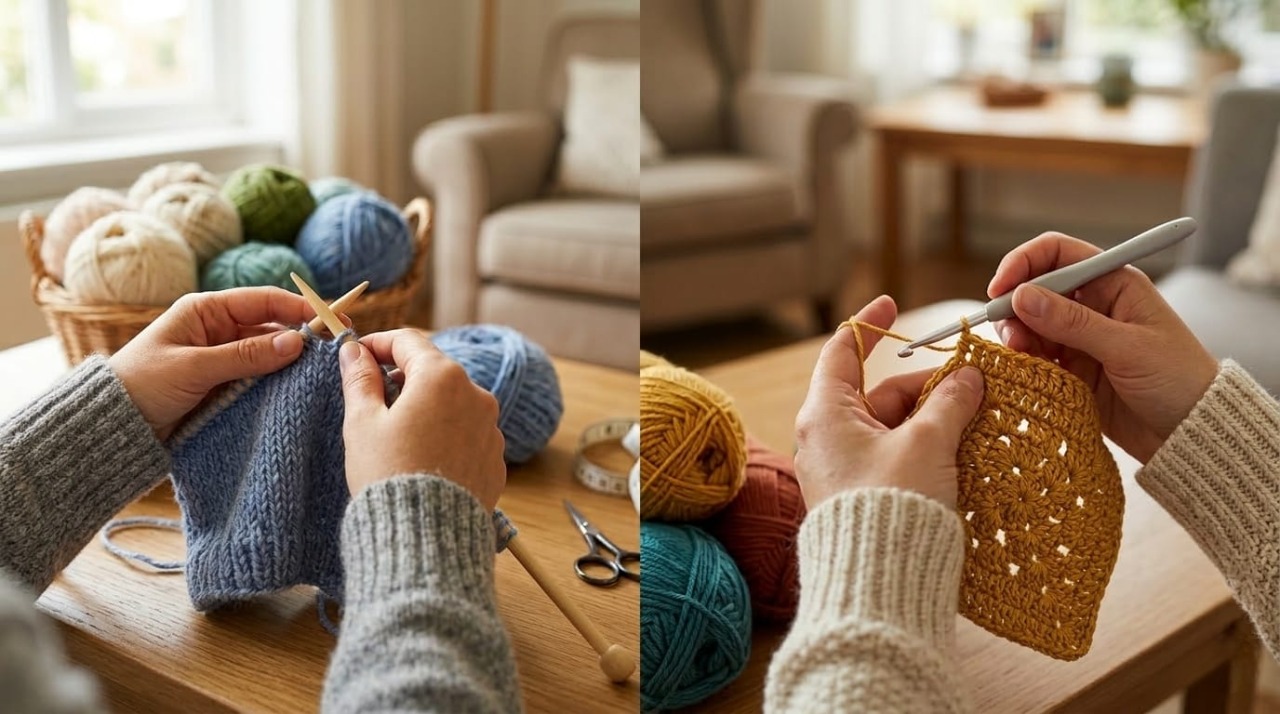
When asking is knitting or crocheting easier, consider your skill level, patience, and project goals. Crocheting often feels simpler for beginners because you work one stitch at a time, like building blocks. If you drop a stitch, the rest stays put.
Knitting keeps an entire row of live stitches on your needles, which requires steady hands and focus to prevent unraveling. Crocheting’s lower dexterity needs make it a gentler entry point. You see progress quickly as chunky stitches grow fast, keeping motivation high.
Knitting rewards patience with smooth, drapey fabrics, ideal for garments like socks, sweaters, and scarves, but it has a steeper learning curve for beginners.
Here’s a quick comparison to make the differences crystal clear:
Quick Comparison Table: Knitting vs Crocheting
| Feature | Knitting | Crocheting |
|---|---|---|
| Tools | Two needles (straight or circular) | One hook |
| Stitches | Multiple live stitches | One active stitch |
| Fabric Texture | Smooth, stretchable | Chunky, textured |
| Learning Curve | Moderate | Easier for beginners |
| Mistake Correction | Harder to fix | Easier to rip out |
| Project Speed | Slower visible progress | Faster visible progress |
| Yarn Usage | Uses less yarn | Slightly more yarn |
| Ideal Projects | Garments, socks, lightweight items | Blankets, scarves, amigurumi |
Tip: If you’re still wondering is crocheting is easier than knitting, the answer leans toward crochet for beginners. Its single-hook approach and forgiving mistakes make it ideal for small, quick projects that build confidence.
Also Read: Does Knit or Crochet Use More Yarn? The Simple Solution
Tools and Supplies: Crochet Hooks vs Knitting Needles
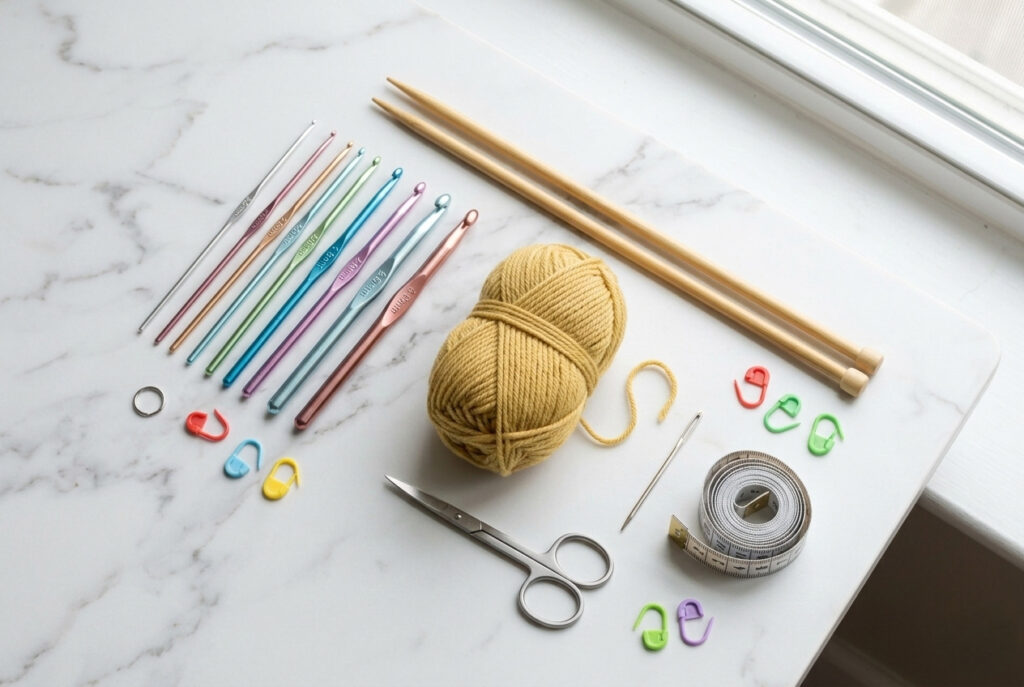
When deciding is knitting or crocheting easier, the tools you choose make a big difference. Beginners often find that simple, beginner-friendly gear can make learning faster and more enjoyable.
Key Tools Overview
| Feature | Crochet | Knitting |
|---|---|---|
| Basics | Single hook (4mm–6mm for starters), ergonomic grips reduce hand strain | Pair of straight or circular needles (US 7–8), plus stitch markers |
| Cost | $5–15 for a set; lightweight and portable | $10–20; straights may slip for beginners |
| Ease Factor | One tool, intuitive hold like a pencil | Two needles — requires practice to manage multiple stitches |
| Best For | Quick scarves, amigurumi, baby blankets | Sweaters, socks, lightweight garments |
Also Read: The Best Interchangeable Knitting Needles
Additional Supplies
Yarn: Start with medium-thickness yarn, like Red Heart or Lion Brand, because it helps cover up uneven stitches.
Stitch markers: Keep track of rows or pattern repeats.
Tapestry needle and scissors: Use these to finish edges and tuck in loose yarn ends.
Measuring tape: Helps ensure your project is the right size.
Expert Tips for Beginners
Learning Curve for Beginners: Is Knitting or Crocheting Easier?
If you’ve ever picked up a ball of yarn and wondered if knitting or crocheting is easier, you’re not alone. For most beginners, crocheting is simpler to start. With just one hook and one active stitch, mistakes are easy to fix, and projects grow quickly. You will not have row-wide problems if you drop a stitch.
Knitting keeps an entire row of live stitches on your needles, which requires steady hands and attention to tension. It rewards patience with smooth, drapey fabrics perfect for garments, but the learning curve is steeper.
After talking to many crafters, it is clear that crocheting helps beginners feel confident more quickly. You can see your project grow in a few hours, while knitting takes longer, and it can be harder to keep your stitches even.
If your hands are not steady, crochet’s bigger stitches are more forgiving if you hold the yarn tightly, twist your hands, or make mistakes.
Pros and Cons: Knitting vs Crocheting
| Feature | Knitting Pro | Knitting Con | Crochet Pro | Crochet Con |
|---|---|---|---|---|
| Speed | Seamless, smooth stockinette once mastered | Slower startup; rows take time | Quick projects, instant gratification | Bulkier fabric |
| Fabric | Stretchy, drapey, lightweight | Dropped stitches ladder down easily | Dense, warm, sturdy for blankets/toys | Less elastic |
| Fixes | Frogging rows is easier with practice | Mistakes affect the entire row | Yank one loop, done | Gaps are too loose |
| Versatility | Socks, lace, cables | Needs more skill | Amigurumi, freeform fun | Fewer delicate patterns |
Tip: For beginners wondering which is easier to learn, crochet usually wins. Small projects like coasters, hats, or baby blankets offer quick success.
Also Read: How to Read Knitting Patterns? Beginners Guide
Step-by-Step Beginner Guide: Crochet vs Knit
If you’ve ever asked yourself is knitting or crocheting easier, the best way to find out is by trying both techniques hands-on. This guide breaks down the essentials for beginners, offering step-by-step instructions, practical tips, and explanations of why each craft may suit your learning style.
Beginner Crochet Steps (Quick Results)
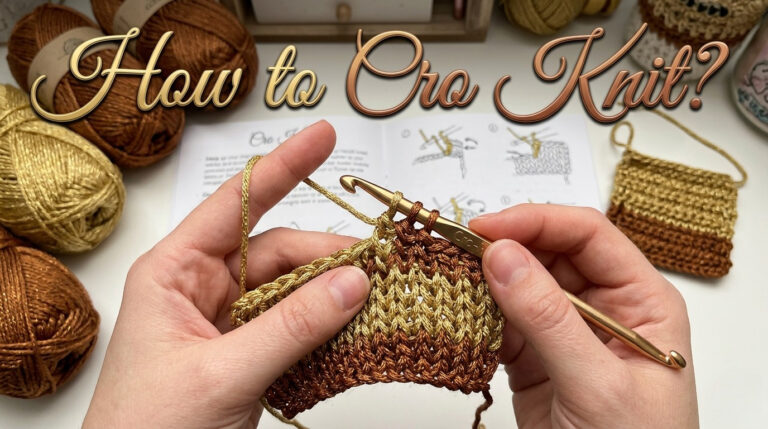
Crochet is often recommended for beginners because you only handle one stitch at a time, which makes mistakes easy to fix and progress highly visible.
Step 1: Tie a Slip Knot
Start by creating a slip knot and placing it on your crochet hook. This forms the foundation for all your projects.
Also Read: Does Slip Knot Count as First Stitch Knit?
Step 2: Chain 20 Stitches
Wrap the yarn over the hook, then pull it through the loop to make a chain. Try to keep your stitches the same size, because if they are too tight or too loose, your project will be harder to make.
Step 3: Work Single Crochet Across the Chain
Insert your hook into the second chain from the hook, yarn over, and pull through two loops. Repeat across the row, then turn your work, chain one, and continue row by row.
Step 4: Expand Your Project
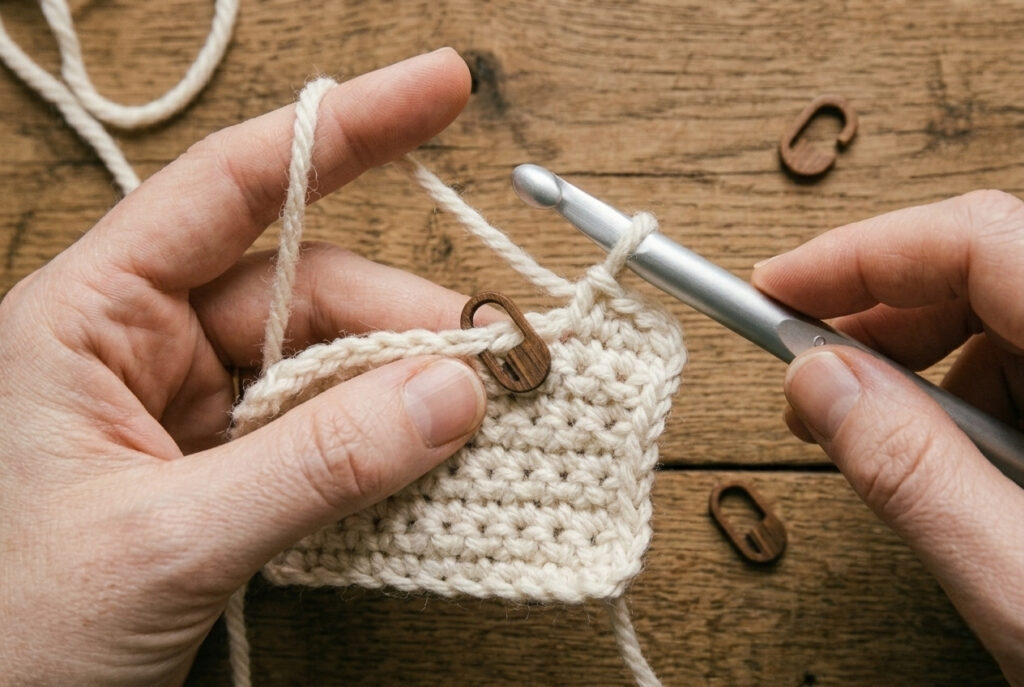
Continue adding rows until your piece reaches the desired length. Ideal beginner projects include scarves, dishcloths, or small blankets.
Why Crochet Works Well for Beginners
One hook minimizes dropped stitches. Mistakes only affect a single stitch, so corrections are simple. Chunky stitches grow quickly, providing immediate visual progress and motivation.
Expert Tip: Use medium-weight yarn (#4/Worsted) and a 5mm (H/8) hook to make learning easier and hide minor stitch errors.
Beginner Knitting Steps (Requires Practice)
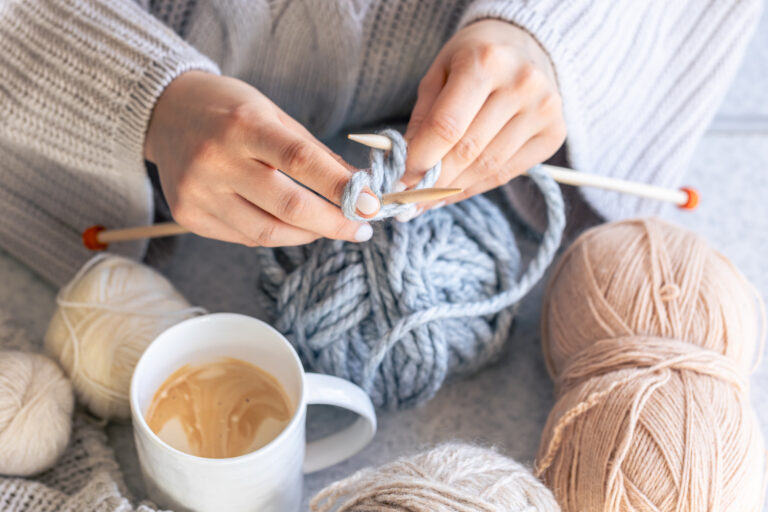
Knitting produces smooth, soft fabrics, but beginners have to keep track of several stitches at once. It is satisfying, but takes more time to learn than crochet.
Step 1: Cast On 20–30 Stitches
Try the long-tail cast-on method to make a stretchy, even edge. Practice starting your stitches a few times to get used to how tight or loose they should be.
Also Read: How to Do a Long Tail Cast On Knitting? Easy Guide
Step 2: Learn the Knit Stitch
Insert the right needle into the first stitch on the left needle, wrap the yarn around, pull it through, and slide the old stitch off. Repeat across the row.
Step 3: Try the Purl Stitch
Purl stitches create ribbing and texture. Alternate between knit and purl rows to explore simple patterns and fabrics.
Also Read: What is Garter Stitch in Knitting? Easy Knitting Explained
Step 4: Bind Off Carefully
Remove your stitches from the needle carefully to secure the edge. Practice on scrap yarn first to maintain even tension.
Also Read: How to Bind Off Knitting: Easy Ultimate Guide
Step 5: Fix Mistakes with a Lifeline
Thread a piece of extra yarn through a row as a lifeline. If you drop a stitch, you can use the lifeline to fix it without losing your work. This is a helpful trick for beginners.
Also Read: How to Fix a Dropped Stitch: A Complete Guide for Knitters
Why Knitting Works Well for Beginners
Produces lightweight, stretchy fabrics suitable for garments like scarves, socks, and sweaters. Teaches tension control, stitch consistency, and basic pattern reading.
Expert Tip: Use US 8 (5mm) needles with medium-weight yarn. Avoid complex stitch patterns until you feel comfortable with even tension.
Crochet vs Knitting for Beginners
Crochet is often easier to pick up because it involves only one active stitch and one hook, making mistakes easy to fix. You’ll see progress quickly, making small projects like dishcloths, scarves, or baby hats ideal for building confidence.
Knitting, while slightly harder for beginners, rewards patience with smooth, stretchable fabrics. It’s perfect for garments and projects that require delicate texture or drape, but managing multiple stitches and correcting mistakes takes more practice.
Expert Takeaways
If your main concern is knitting or crocheting easier, crochet usually wins for beginners due to its simplicity and forgiving nature. Start small. Completing quick projects reinforces skills and keeps motivation high.
Medium-weight yarn and appropriately sized tools make learning smoother and more enjoyable. Mastering both crafts eventually provides flexibility, but starting with crochet helps you gain confidence and see visible results faster.
Common Mistakes and Fixes
Even beginners make mistakes, but fixing them quickly saves frustration. Here’s a concise guide:
| Craft | Mistake | Fix |
|---|---|---|
| Crochet | Dropped stitch | Insert the hook in the loop and continue |
| Crochet | Uneven tension | Practice chains and single crochet; loosen grip |
| Knitting | Dropped stitch | Pick up a stitch from the ladder or use a lifeline |
| Knitting | Laddering | Adjust tension, count stitches carefully |
| Both | Incorrect stitch count | Use stitch markers and row counters |
Tip: If you’re still wondering if crocheting is easier than knitting, crochet’s one-stitch-at-a-time approach makes fixing errors simpler and less stressful.
Also Read: How to Add Stitches When Knitting: A Complete Guide
Best Starter Projects for Beginners: Crochet vs Knitting
When starting with yarn crafts, picking the right projects is important. Small, easy items help you feel more confident, learn new skills without getting frustrated, and see your progress quickly. Choosing simple projects is also helpful when deciding is knitting or crocheting easier.
Crochet Starter Projects
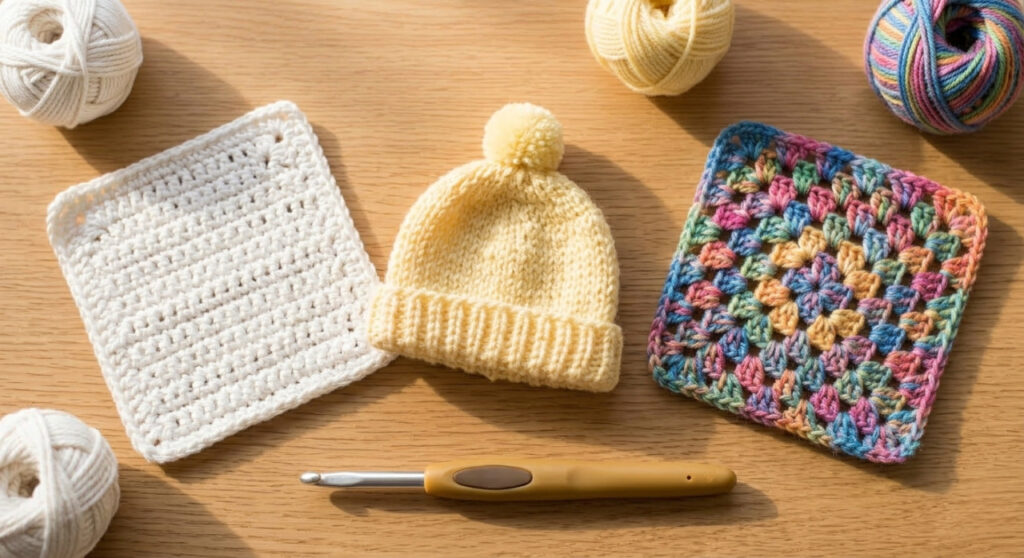
1. Dishcloths (1–2 hours)
Why it’s ideal: Dishcloths are small, practical, and let you practice basic stitches like chain, single crochet, and double crochet.
Learning benefits: Helps you keep your stitches even, count them, and learn how to turn your work at the end of a row.
Materials: Medium-weight yarn (#4/Worsted), size H/8 (5mm) hook.
2. Baby Beanies (2–3 hours)
Why it’s ideal: Quick, satisfying projects that can be finished in an evening.
Learning benefits: Teaches you how to crochet in the round, make your project bigger or smaller, and change its shape.
Materials: Soft baby yarn, crochet hook size recommended on label.
3. Granny Squares (for blankets)
Why it’s ideal: Repetitive, made in pieces, and lets you try out different colors and yarn types.
Learning benefits: Helps you keep your stitches even, control their tightness or looseness, connect squares, and prepare for larger projects.
Materials: Medium-weight yarn, 5mm hook, stitch markers optional.
Also Read: Best Yarn for Blanket Knitting| Expert Guide 2025
Expert Tip for Crochet: Start with one small project, like a dishcloth, to see progress quickly. Success with small items builds confidence before moving to larger items like blankets or amigurumi.
Knitting Starter Projects
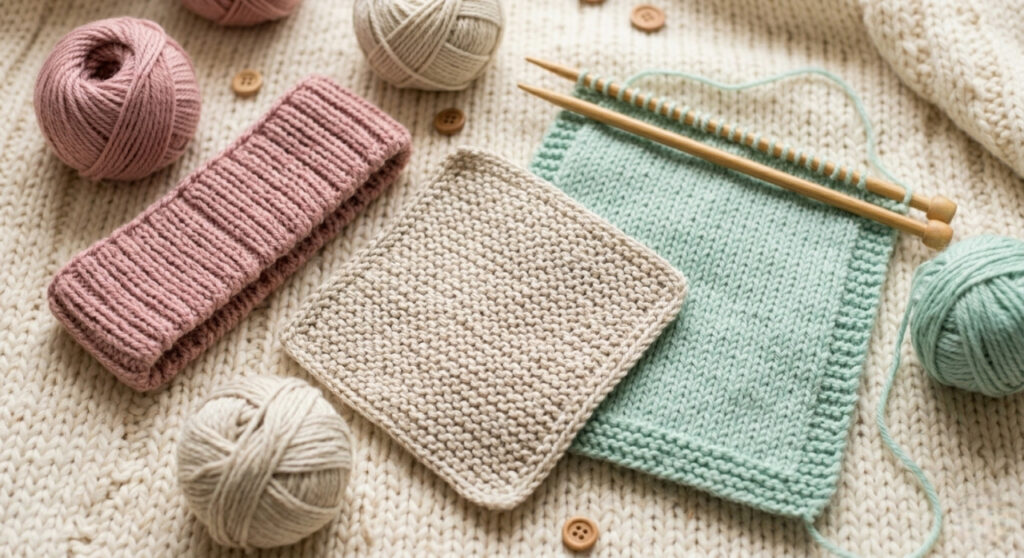
1. Headbands or Cowls
Why it’s ideal: Short projects that let you practice knit and purl stitches without committing to a long project.
Learning benefits: Shows you how to keep your stitches even, check their size, and try easy patterns like ribbing.
Materials: Medium-weight yarn, US 7–8 (4.5–5mm) needles.
Also Read: How to Knit a Headband: Easy Beginner Guide
2. Small Scarves or Washcloths
Why it’s ideal: Provides longer practice time than headbands but is still manageable.
Learning benefits: Lets you practice basic stitches, helps you keep track of your stitches, and teaches you how to finish your project by removing stitches from the needle and tucking in yarn ends.
Materials: Medium-weight yarn, straight or circular needles.
3. Baby Blankets (Medium-Sized, Simple Patterns)
Why it’s ideal: It lets you try a bigger project while still using easy stitches that are good for beginners.
Learning benefits: Helps you keep your rows even, control how tight or loose your stitches are, and learn how to switch colors and add borders.
Materials: Soft acrylic or cotton yarn, size 8–10mm needles for quicker progress.
Also Read: Best Knitting Machine for Blankets in 2025: Top Picks
Expert Tip for Knitting: Use a lifeline or scrap yarn to secure your stitches. This helps fix mistakes quickly and reduces frustration while learning.
Why Starting Small Matters
Also Read: How to Finish a Knitting Project: A Complete Guide
FAQs: Is Knitting or Crocheting Easier?
Conclusion: Is Knitting or Crocheting Easier?
For beginners, the answer to Is Knitting or Crocheting Easier? leans toward crocheting. It requires less coordination, uses only one hook, and is easy to fix mistakes. Projects grow quickly, giving visible results and confidence.
Knitting produces a thinner, stretchier fabric that is well-suited for clothing. It takes more practice to handle many stitches, keep your yarn even, and fix mistakes.
Your choice ultimately depends on:
Start small, experiment, and enjoy creating unique handmade items. Mastering both crafts eventually provides flexibility, but starting with crochet helps you see results fast and build essential crafting confidence.
Also Read: How to Knit a Gauge Swatch: Quick Guide