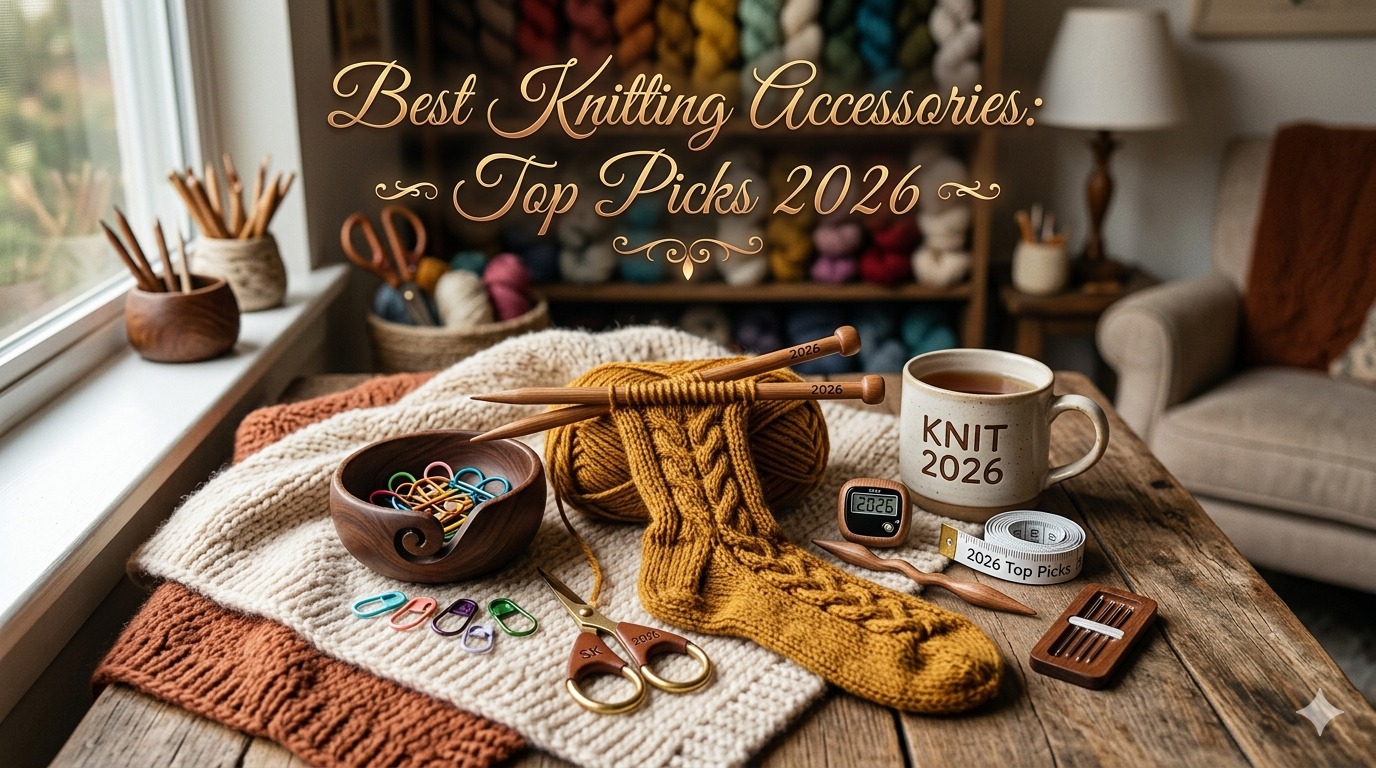
Best Knitting Accessories: Top Picks 2026
Hey there! It’s me, GR Hingoro. Today, I’m stepping away from the usual how-tos to share my essential knitting tools. Years of working with various yarns, patterns, and techniques have helped me build a reliable toolkit with the best knitting accessories I truly depend on.
If you’re serious about improving your knitting or want to make the process smoother and more enjoyable, you’re in the right place. I’ve carefully selected knitting accessories and notions that consistently deliver results. These aren’t just popular picks; they’re tools I’ve tested, trusted, and continue to use in real projects.
So, let’s get straight into the essentials that truly make a difference.
Knitting Basics: What You Truly Need First
Before adding knitting accessories, focus on the essentials: keep it simple. You only need yarn and knitting needles to start. Everything else is optional, but the right accessories can make knitting easier, smoother, and more enjoyable. That is why most experienced knitters use them regularly.
Also Read: How to Cast on Knitting with Two Needles: A Complete Guide
What Makes the Best Knitting Accessories?
Before discussing individual products, let’s explore what separates average tools from truly useful ones.
From my experience, the best knitting tool should be:
I’ve tested dozens of knitting supplies, and the ones below consistently stand out.
Essential Knitting Tools I Rely On
Every knitter builds their toolkit differently, but a few tools consistently prove their value. Over the years, I’ve relied on these knitting accessories for better accuracy, smoother workflow, and more consistent results.
Best Knitting Accessories
1. Interchangeable Needle Set
Interchangeable needles are one of the most practical upgrades I’ve made. Instead of juggling multiple fixed needles, I can switch sizes and cables for each project. This flexibility is especially useful for garments where sizing and length often change mid-project. A good set saves space, reduces clutter, and gives you full control over your knitting setup.
ChiaoGoo Twist Red Lace 7500-C

The ChiaoGoo Twist Red Lace 7500-C is regarded as one of the best knitting accessories for advanced knitters who prioritize precision and durability. The surgical-grade stainless steel tips provide a smooth, controlled knitting experience, helping maintain even stitches without slipping. Its signature red cables are flexible and memory-free, reducing twisting and making long knitting sessions more comfortable.
The set includes a wide range of needle sizes (US 2–15), multiple cables, and accessories, making it versatile for projects from fine lacework to bulky garments.
However, the premium price may not suit beginners, and the metal tips feel heavier than bamboo alternatives.
This set delivers reliable performance, long-term durability, and professional-level quality, making it a worthwhile investment for dedicated knitters.
Pros
Cons
Also Read: The Best Interchangeable Knitting Needles
2. Yarn
Yarn is the foundation of every knitting project, and choosing the right one is essential. It varies in fiber, weight, and texture, all of which affect the final result. Understanding these differences ensures better stitch definition, durability, and project success.
Red Heart Super Saver Aran Yarn (3-Pack)

This yarn is a popular, budget-friendly choice for people new to knitting or making big projects. It is made of 100% acrylic, so it is strong, easy to care for, and machine-washable. This makes it good for making things like blankets, sweaters, and everyday items. Each skein has a lot of yarn, so you get good value and can use it in many different patterns.
When you use this yarn, it keeps its shape well and handles many washes. At first, it can feel a bit rough or stiff, especially before you wash it for the first time. It gets softer with more washes, but it might not be the best for very soft or fancy clothes.
Overall, it is a dependable, affordable, and highly practical yarn that remains a staple choice for everyday knitting projects.
Pros
Cons
Also Read: Best Yarn for Baby Blanket: Trusted 2026 Picks
3. Stitch Markers
I use stitch markers in almost every project. They help me track pattern repeats, shaping, and stitch counts without second-guessing. I prefer a mix of locking markers for flexibility and simple rings for smooth knitting. They seem small, but they prevent costly mistakes.
Clover 3109 Jumbo Locking Stitch Markers

The Clover 3109 Jumbo Locking Stitch Markers are a dependable addition to any toolkit and a practical accessory for maintaining stitch accuracy. Their locking safety-pin design keeps them securely in place, making them ideal for tracking increases, decreases, and pattern repeats without slipping mid-project.
They are lightweight, smooth, and easy to open and close without catching or damaging yarn. The larger size works well for bulky or chunky yarns, where standard markers may be too small or hard to manage.
However, they may feel slightly oversized when used with fine or lace-weight yarns, in which case smaller markers are more suitable.
Overall, this is a simple but effective tool that improves accuracy and workflow, especially for beginners and knitters working on larger projects.
Pros
Cons
Also Read: How to Use Stitch Markers for Knitting: Easy Guide
4. Row Counter
A row counter has become essential for maintaining accuracy, especially in larger projects. Instead of relying on memory, I can track rows instantly and avoid losing my place. For complex patterns or garments, it reduces errors and saves time.
Koicaxy Electronic Finger Row Counter

The Koicaxy Electronic Finger Counter is a practical, budget-friendly tool and a useful addition to essential knitting accessories for tracking rows during projects. Designed to fit on your finger, it allows smooth one-hand operation so you can count rows without interrupting your knitting. The LCD display shows counts up to 99,999, and the reset function makes it easy to start fresh for new sections or projects.
In use, it is lightweight, portable, and helpful for repetitive counting in knitting and crochet. However, accidental clicks can occur when stored in a project bag, and the plastic build feels basic compared to higher-end tools.
Overall, it is a simple, affordable, and effective tool for everyday knitting, particularly useful for beginners and knitters who want reliable row tracking without complexity.
Pros
Cons
Also Read: How to Read Knitting Patterns? Beginners Guide
5. Yarn Snips / Scissors
Clean cuts make a noticeable difference in finishing. I keep a compact pair of yarn snips in every project bag for quick, precise cutting. They are lightweight, reliable, and more efficient than regular scissors.
Fiskars Premier No. 5 Micro-Tip Scissors

The Fiskars Premier No. 5 Micro-Tip Scissors are a reliable, precise tool and a valuable addition to essential knitting accessories for clean finishing. The ultra-sharp stainless steel blades cut to the tip, ideal for trimming yarn ends and handling detailed or tight areas in knitting projects.
In use, they feel lightweight and comfortable to control thanks to the double-loop handle, which works well for both right- and left-handed users. The micro-tip design offers more precision than standard scissors, especially when weaving in ends or finishing garments.
However, they are slightly larger than compact yarn snips and may not fit easily into very small project pouches or travel kits.
Overall, they are a durable, accurate, and dependable cutting tool for knitters who prioritize precision and clean finishing results.
Pros
Cons
6. Blunt Needles
Blunt needles are key for finishing work, whether weaving in ends or seaming pieces together. I prefer bent-tip needles because they make it easier to catch stitches accurately. This small upgrade has improved both the speed and quality of my finishing.
UOOU Bent Tip Tapestry Needles (15 pcs)

The UOOU Bent Tip Tapestry Needles set is a practical, budget-friendly addition to essential knitting accessories, especially for finishing tasks like weaving in ends and seaming. The large eye openings make threading yarn quick and easy, even with thicker or multi-strand fibers.
The bent tip design guides the needle through stitches, improving control and speed when finishing projects. The set includes multiple sizes, offering flexibility for different yarn weights and project types. The storage box keeps everything organized and easy to access.
In everyday use, the smooth metal surface works well with most yarns, though the build is basic compared to premium tapestry needle sets.
Overall, this is a reliable, beginner-friendly, cost-effective tool set that performs well for routine knitting finishing tasks without unnecessary complexity.
Pros
Cons
Also Read: How Do You Weave in Ends in Knitting? Step-by-Step
7. Yarn Swift and Ball Winder
A yarn swift and ball winder changed how I prepare yarn. They turn loose hanks into neat, center-pull yarn cakes quickly and without strain. This setup saves time, prevents tangling, and keeps yarn ready to use.
Knit Picks Wooden Umbrella Yarn Swift

The Knit Picks Wooden Umbrella Yarn Swift is a practical tool and a strong addition to the best knitting accessories for knitters who work with hanks or skeins. It features smooth rotation that lets yarn unwind evenly, reducing tangles and saving time during preparation.
Its sturdy wooden construction provides stability, and the adjustable arms fit various skein sizes. Paired with a ball winder, it transforms hanks into neat, center-pull yarn cakes, making project setup faster and more organized.
It is easy to assemble and stays secure when clamped to a table or surface. The winding process is smooth and controlled, even with larger skeins. However, it requires enough clamping space and is less essential for knitters who mainly use pre-wound yarn.
Overall, it is a durable, efficient, and time-saving tool that greatly improves yarn preparation for regular knitters, especially those working with hand-dyed or specialty yarns.
Pros
Cons
8. Neck Light
A neck light is one of those tools I didn’t expect to use often, but now rely on regularly. It provides focused, hands-free lighting, which is especially helpful when working with dark yarns or knitting in low light.
Glocusent LED Neck Light

The Glocusent LED Neck Light is a practical hands-free lighting solution that works well for knitting in low light. It has three color modes and six brightness levels, letting you adjust lighting based on your yarn color and environment to reduce eye strain during long sessions.
The flexible arms let you direct light exactly where you need it, a major advantage over traditional lamps. Its lightweight design makes it comfortable to wear. The battery lasts up to 80 hours, so you won’t need to recharge often.
In use, it’s especially helpful when working with dark yarns or detailed patterns at night. However, some users may find the fit slightly bulky around the neck.
A highly useful accessory for knitters who work in low light or want more control over visibility.
Pros
Cons
9. Knitting Notebook
Keeping a knitting notebook has improved my consistency across projects. I record pattern details, adjustments, and notes for future reference. It’s useful when repeating projects or troubleshooting mistakes.
Amazon Basics Knitting Notebook

The Amazon Basics Classic Lined Notebook is a simple and practical tool for knitters who want to keep their projects organized. With 240 lined pages, it offers ample space to record patterns, stitch counts, yarn details, and personal adjustments. Its compact 5″ x 8.25″ size fits easily in a project bag, and the hardcover adds durability for daily use.
The elastic closure keeps pages secure, and the smooth paper works well with pens without excessive bleed-through. Although it lacks knitting-specific templates, its simplicity makes it flexible for any project tracking.
A reliable, budget-friendly knitting notebook that helps keep projects organized and easy to track over time.
Pros
Cons
10. Project Bag
A good project bag keeps everything organized and accessible. It prevents yarn from tangling, protects tools, and makes it easier to carry projects wherever you go. For me, it is not just storage but maintaining an efficient workflow.
LTINVECK Knitting Project Bag

The LTINVECK Knitting Bag Backpack is a practical addition to the best knitting accessories, designed for knitters who want an organized, portable system to store yarn, tools, and multiple works-in-progress (WIPs). Its backpack design is especially useful for travel- or commuting-knitters who need hands-free convenience.
Inside, the compartmentalized layout keeps yarn balls, needles, hooks, and active projects separated, reducing tangles and improving workflow. The structured build helps the bag maintain its shape when fully packed, making it easier to access supplies without everything collapsing inside.
In everyday use, it performs well for knitters managing multiple projects at once. It is particularly helpful for those who value organization and want a single storage solution for both home and travel knitting.
Overall, it is a spacious, functional, and well-designed project bag that supports efficient, clutter-free knitting.
Pros
Cons
Also Read: Best Knitting Bags 2025: Ultimate Guide
These tools aren’t just accessories; they support accuracy, save time, and make the entire knitting process more controlled and enjoyable. Over time, I’ve refined my toolkit to include only what truly adds value, and these are the items I consistently rely on.
The Non-Negotiable Essentials
Without these knitting accessories, you cannot start or finish a project correctly. Every other item is negotiable; these are not.
Also Read: How to Join in Round in Knitting: Easy Guide
Must-Have vs Nice-to-Have
These knitting accessories are grouped by importance within a single category.
Must-Have (You Actually Need These)
Nice-to-Have (Convenience Items)
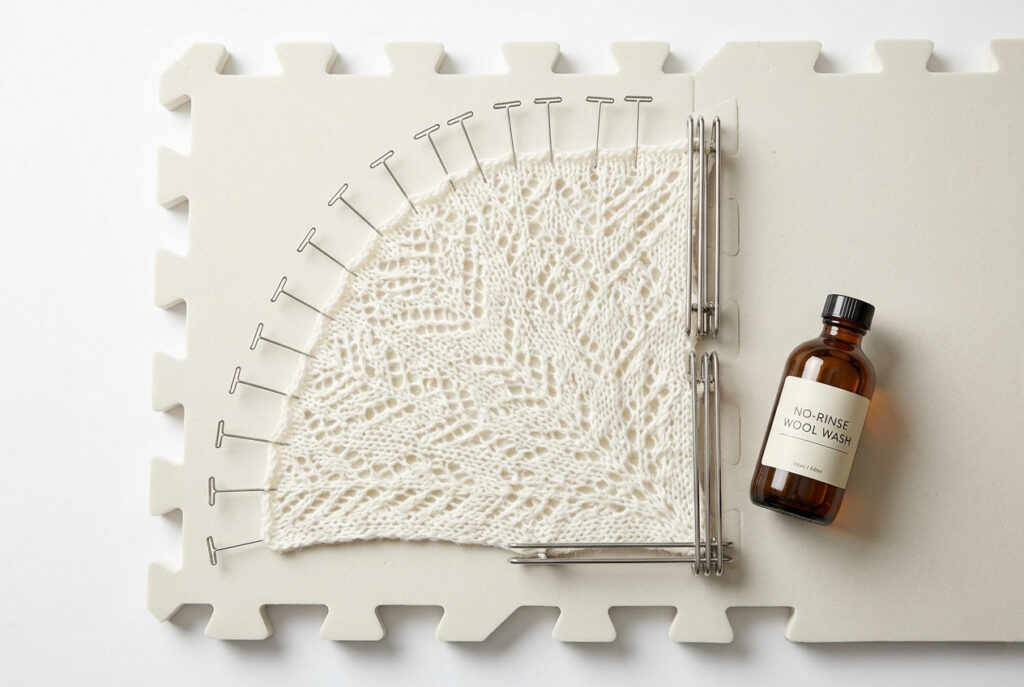
Blocking Tools: The Professional Finish
Blocking is not optional for finished objects. These tools separate homemade from handcrafted.
Also Read: How Do I Block a Knitted Sweater? Step-by-Step
Tools That Feel Optional — Until You Try Them
These knitting accessories solve specific frustrations you didn’t know you had. A beginner skips them; an experienced knitter quietly swears by them.
Also Read: How to Change Colors While Knitting? Beginners Tips
Buying Guide: How to Choose the Right Knitting Accessories
Choosing the right knitting accessories is not about buying everything you see. It’s about selecting tools that genuinely improve your knitting experience. A well-planned toolkit saves time, reduces mistakes, and makes every project more enjoyable. Here’s how to make smarter, more confident choices.
1. Match Tools to Your Skill Level
Let your skill level guide your first purchases.
Starting simple helps you build confidence before expanding your toolkit.
Also Read: Top 10 Best Knitting Patterns for Beginners: Easy Guide
2. Choose Based on Project Type
Different projects require different tools. Understanding this improves both results and workflow.
Matching tools to your project type improves efficiency and reduces frustration.
Also Read: How to Knit a Hat with Straight Needles? Beginner’s Guide
3. Avoid Overbuying Knitting Tools
One of the most common mistakes is buying too many knitting accessories at once.
Instead:
A focused toolkit is more effective than an overloaded one. Quality and usability matter more than quantity.
4. Prioritize Comfort and Usability
If a tool feels uncomfortable, inefficient, or awkward, you won’t use it, no matter how popular it is.
Look for:
Comfort directly impacts consistency, especially during long knitting sessions.
Final Tip
The best knitting toolkit is personal. It should support your rhythm, reduce effort, and make knitting feel natural rather than complicated. Choose tools that fit your workflow, not just trends.
Links to All the Products
- Double-Pointed Needles
- Measuring Tape
- Tapestry Needles
- Food Scale
- Needle Gauge Tool
- Crochet Hooks
- Cable Needles
- Stitch Holders
- Yarn Bowl
- Point Protectors
- Emery Board
- T-pins
- Needle Case
- Knitting Thimble/Yarn Guide
- Fuzz Remover
- Knit Blockers
- Blocking Mats
- Mesh Drying Rack
- Needle Stoppers
- Yarn Bobbins
- Pom Pom Marker
- Wool Detergent
FAQs on Best Knitting Accessories
Also Read: The Best Knitting Machines For Crafters
Conclusion: Best Knitting Accessories
The best knitting accessories are not about having the most tools. Instead, it’s about picking the ones that truly help your workflow. Each accessory makes knitting easier, quicker, and more accurate.
As you get better at knitting, your toolkit should grow with you. Beginners do well with basic tools for accuracy, while experienced knitters use special accessories for speed and a polished look. The right accessories help you avoid mistakes, save time, and enjoy every project from beginning to end.
One Comment