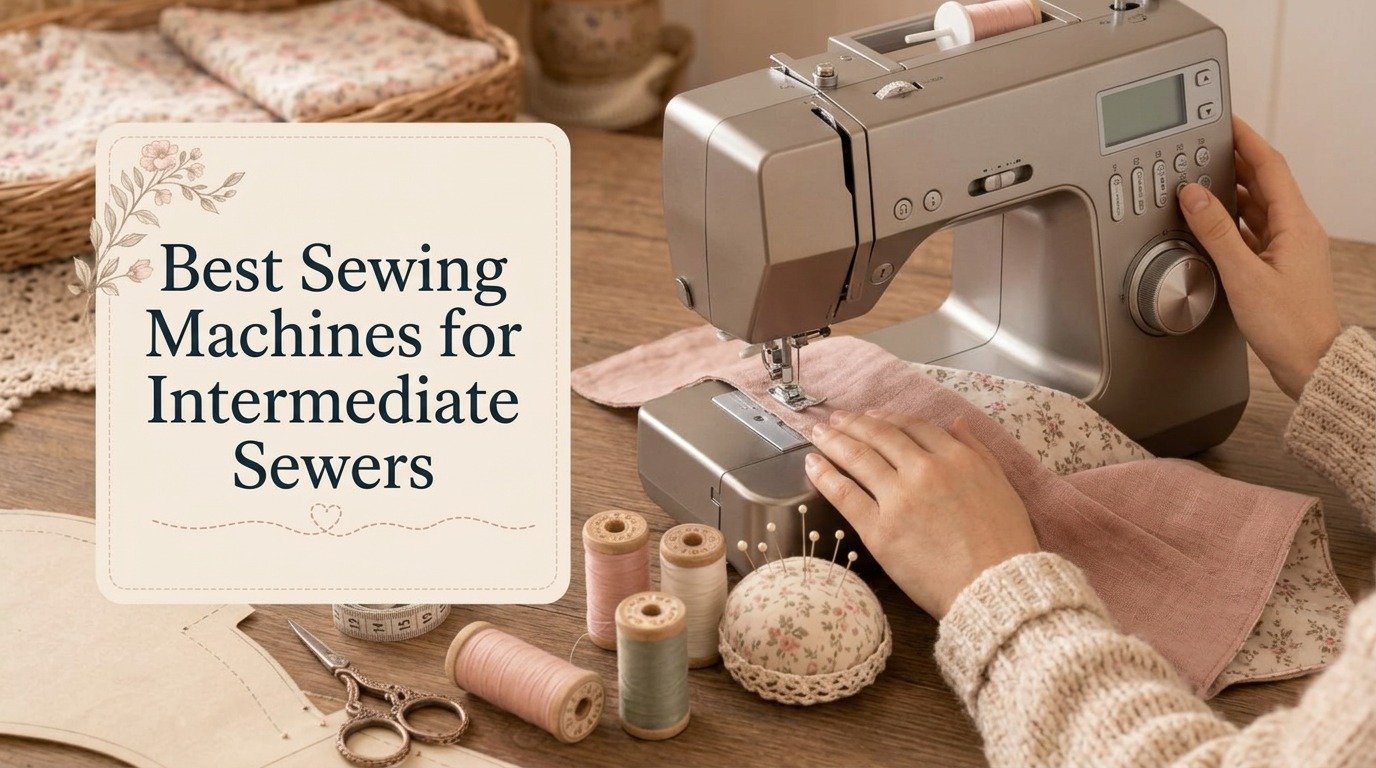
Top 10 Best Sewing Machines for Intermediate Sewers
Moving beyond a beginner sewing machine lets sewists take on more detailed and rewarding projects. As skills improve, garments, quilts, bags, and home décor require better stitch quality, smoother fabric feeding, and more reliable performance than entry-level models provide.
Choosing the Best Sewing Machines for Intermediate Sewers means finding a machine that balances versatility, durability, and ease of use rather than just selecting the most expensive option. This guide compares carefully chosen models based on stitch quality, fabric handling, useful features, and overall value.
Whether sewing everyday clothing, quilting, or working with heavier fabrics, these recommendations help identify a dependable machine that supports skill development and long-term creativity.
Also Read: 10 Best Thread for Sewing: Ultimate Guide 2026
Key Takeaways
Quick Comparison Table
The following table summarizes the top picks in this guide. It makes it easier to compare their key strengths before choosing the best sewing machine for intermediate sewers. Whether you prioritize quilting, garment construction, heavy-duty sewing, or embroidery, these models offer reliable performance for many projects.
| Sewing Machine | Type | Built-in Stitches | Best For | Heavy Fabric Capability |
|---|---|---|---|---|
| Brother XR9550 | Computerized | 165 | Quilting & Everyday Sewing | Moderate |
| Brother CS7000X | Computerized | 70 | Best Overall Value | Moderate |
| SINGER Quantum Stylist 9960 | Computerized | 600 | Decorative Sewing & Quilting | Good |
| Janome JW8100 | Computerized | 100 | Everyday Sewing & Home Décor | Moderate |
| SINGER Heavy Duty 6800C | Computerized Heavy-Duty | 586 | Denim, Canvas & Heavy Fabrics | Excellent |
| Janome 3160QDC-G | Computerized | 60 | Garment Sewing & Quilting | Moderate |
| Brother PQ1600S | Straight-Stitch | Straight Stitch Only | High-Speed Quilting | Excellent |
| Juki TL-2010Q | Straight-Stitch | Straight Stitch Only | Professional Quilting & Tailoring | Excellent |
| Janome HD3000 | Mechanical | 18 | Mechanical Durability & Heavy Fabrics | Excellent |
| Brother SE700 | Sewing & Embroidery | 103 | Sewing & Embroidery Projects | Moderate |
What Makes a Sewing Machine Intermediate-Friendly?
Moving from a beginner machine to an intermediate model means gaining more control, flexibility, and consistent performance. As sewing skills develop, projects involve a wider range of fabrics and techniques that require features beyond the basics. Understanding what to look for makes it easier to choose a machine that supports long-term sewing goals.
Better Stitch Variety
Most beginner machines include essential straight and zigzag stitches. Intermediate models add stretch, decorative, quilting, heirloom, and utility stitches plus multiple one-step buttonholes. A broader stitch selection supports garment construction, quilting, home décor, and decorative sewing without extra tools.
Stronger Motor Performance
Larger projects and heavier fabrics demand more from a sewing machine. A stronger motor delivers greater piercing power through denim, canvas, and layered quilts while maintaining consistent stitch quality across fabric weights.
Easier Threading
Features like an automatic needle threader, quick-set bobbin, built-in thread cutter, and clearly marked threading path reduce setup time and simplify routine sewing tasks. These features allow more time to focus on the project instead of machine preparation.
Improved Fabric Feeding
A dependable feed system helps move fabric evenly under the needle. Well-designed feed dogs improve control when sewing lightweight fabrics, knits, quilts, and multiple fabric layers, reducing uneven stitches and fabric shifting.
Room to Grow
An intermediate sewing machine should support new techniques as experience increases. Features such as adjustable speed control, additional presser feet, extension tables, and customizable stitch settings provide greater versatility and reduce the need for another upgrade as sewing interests expand.
Best Sewing Machines for Intermediate Sewers
Choosing the right model depends on the types of projects and the features that matter most. The following reviews compare reliable machines by stitch quality, ease of use, fabric handling, durability, and overall value to help intermediate sewists decide.
1. Brother XR9550 Sewing and Quilting Machine Review

The Brother XR9550 is a feature-rich computerized sewing machine that offers an excellent balance of versatility, ease of use, and affordability for intermediate sewists. Its wide stitch selection and quilting accessories make it suitable for everything from garment construction to decorative sewing.
Stitch quality is consistent, and the automatic needle threader and speed control improve usability. However, its lightweight construction is less stable when sewing multiple layers of heavy fabrics like thick denim or canvas. Experienced users may also outgrow its capabilities over time.
The Brother XR9550 remains one of the strongest choices for intermediate sewists thanks to its generous stitch selection, quilting accessories, and beginner-friendly controls. Unless you regularly sew thick denim or canvas, it offers excellent value and enough versatility to support years of creative sewing.
Also Read: How to Sew a Pillow: Easy Guide for Beginners
Pros
Cons
2. Brother CS7000X Computerized Sewing and Quilting Machine Review

The Brother CS7000X is one of the best sewing machines for intermediate sewers, offering a practical mix of performance and ease of use. Its 70 built-in stitches, LCD display, wide extension table, and 10 presser feet make it suitable for garment sewing, quilting, and home décor projects.
The fixed needle bar improves stitch accuracy, while the automatic needle threader and speed control add convenience. It handles most light to medium-weight fabrics smoothly but is less effective for frequent heavy-duty sewing on thick materials like multiple layers of denim or canvas.
Overall, the Brother CS7000X delivers reliable stitch quality, useful features, and solid value for sewists looking to expand their skills.
Pros
Cons
3. SINGER Quantum Stylist 9960 Review

The SINGER Quantum Stylist 9960 is one of the best sewing machines for intermediate sewers who want advanced features for quilting, garment making, and decorative sewing. It offers 600 built-in stitches, lettering fonts, a one-step buttonhole, an extension table, and automatic functions that simplify detailed projects.
The machine delivers smooth stitching on most fabrics and offers plenty of creative flexibility. However, its extensive features can take time to learn, and the higher price may not suit occasional sewists.
It handles everyday and medium-weight fabrics well, but very thick materials may require slower stitching. Overall, the SINGER Quantum Stylist 9960 is a reliable computerized machine that offers excellent versatility for sewists ready to expand their skills.
Pros
Cons
4. Janome JW8100 Computerized Sewing Machine Review

The Janome JW8100 is a strong choice among the best sewing machines for intermediate sewers, offering a balance of convenience and reliable performance. It features 100 built-in stitches, seven one-step buttonholes, an extension table, a hard cover, and 22 accessories for quilting, garment sewing, and home décor projects.
The machine produces consistent stitches and has user-friendly controls that make it easy to explore new techniques. It handles most light- to medium-weight fabrics well but is not intended for frequent heavy-duty sewing through thick denim or multiple layers of canvas.
Overall, the Janome JW8100 is a dependable computerized sewing machine that provides good value and enough features to support growing sewing skills.
Also Read: How to Sew a Curtain? Easy Steps for Perfect Results
Pros
Cons
5. SINGER Heavy Duty 6800C Review

The SINGER Heavy Duty 6800C is one of the best sewing machines for intermediate sewers needing computerized features and extra sewing power. It offers 586 stitch applications, a full metal frame, LCD screen, and a strong motor with enhanced piercing power for quilting, garment making, and heavier fabrics.
The machine delivers smooth, consistent stitches and includes automatic features that simplify larger projects. However, its wide range of functions may take time to learn. It is also heavier than many comparable models.
Overall, the SINGER Heavy Duty 6800C combines durability, versatility, and reliable performance, making it a solid upgrade for sewists ready to tackle more challenging projects.
Also Read: How to Sew a Rip? Easy 6- Step Guide
Pros
Cons
6. Janome 3160QDC-G Sewing and Quilting Machine Review

The Janome 3160QDC-G is one of the best sewing machines for intermediate sewers, offering dependable performance for quilting, garment construction, and everyday sewing. It combines computerized convenience with smooth stitch quality, automatic features, and a bonus quilt kit, making it a practical choice to expand sewing skills.
Its compact design is easy to store and provides the precision needed for detailed projects. Although it handles most light to medium-weight fabrics well, it is not intended for frequent heavy-duty sewing through very thick materials.
The higher price may be a consideration for casual sewists. Overall, the Janome 3160QDC-G is a reliable, well-built machine that delivers consistent results and long-term value.
Also Read: How to Sew a Gusset? Easy Step-by-Step Guide
Pros
Cons
7. Brother PQ1600S High-Speed Straight Stitch Machine Review

The Brother PQ1600S is one of the best sewing machines for intermediate sewers focusing on quilting, piecing, and professional-quality straight stitching. Its high speed, large workspace, and powerful motor make it ideal for quilts, home décor, and heavy fabrics.
The machine delivers consistent straight stitches and handles multiple fabric layers with ease. However, it is straight-stitch-only and does not offer decorative or zigzag stitches, limiting its versatility for garment sewing. Its premium price makes it better suited for dedicated sewists.
Overall, the Brother PQ1600S is an excellent choice for quilters and anyone who values speed, precision, and durability.
Also Read: How to Sew Binding on a Quilt? Step-by-Step Guide
Pros
Cons
8. Juki TL-2010Q Sewing Machine Review

The Juki TL-2010Q is one of the best sewing machines for intermediate sewers who prioritize speed, precision, and durability. Designed with industrial-inspired performance, it delivers consistent straight stitches for quilting, tailoring, apparel, and home décor projects.
The automatic thread trimmer, powerful motor, and spacious work area improve efficiency during long sewing sessions. However, this straight-stitch-only machine lacks zigzag and decorative stitches, making it less versatile for general sewing.
Its premium price may exceed what many hobbyists need. Overall, the Juki TL-2010Q is an outstanding investment for sewists seeking professional-quality straight stitching and dependable long-term performance.
Pros
Cons
9. Janome HD3000 Heavy-Duty Sewing Machine Review

Sewists who prefer the simplicity and durability of a mechanical machine will appreciate the Janome HD3000, which delivers dependable performance on both everyday fabrics and heavier materials.
The machine produces consistent stitches and is easy to operate, making it dependable for everyday sewing. However, it offers fewer stitch options than computerized models and lacks advanced features like an LCD or programmable settings.
Overall, the Janome HD3000 stands out for its durability, smooth performance, and long-term reliability.
Pros
Cons
10. Brother SE700 Sewing and Embroidery Machine Review

The Brother SE700 is one of the best sewing machines for intermediate sewers who want both sewing and embroidery capabilities in one machine. It features 103 built-in stitches, 135 embroidery designs, wireless connectivity, a 4″ × 4″ embroidery area, and a responsive touchscreen for easy navigation.
The machine delivers reliable stitch quality and is ideal for customizing garments, quilts, and home décor projects. However, the 4″ × 4″ embroidery hoop limits larger embroidery designs, and mastering both sewing and embroidery functions takes time.
Overall, the Brother SE700 offers excellent versatility and creative flexibility for sewists ready to expand their skills beyond standard sewing.
Also Read: Can You Embroider With a Sewing Machine? Easy Guide
Pros
Cons
How to Choose the Right Sewing Machine
Before choosing a sewing machine, consider the features that match the types of projects you plan to work on most often.
Fabric Compatibility
Choose a machine that handles the fabrics you use most frequently. A computerized model works well for garments, quilting cotton, and everyday sewing. Denim, canvas, and layered seams benefit from a stronger motor, sturdy frame, and reliable feed system.
Stitch Selection
Fifty to 100 built-in stitches are enough for most intermediate sewists. Focus on practical utility stitches and buttonholes rather than a large collection of decorative designs.
Mechanical or Computerized
Mechanical machines offer simplicity, durability, and ease of maintenance. Computerized models provide greater precision, speed control, and convenience for a wider range of sewing techniques.
Also Read: How to Load Bobbin in Sewing Machine? Easy Steps
Workspace
A larger throat space makes quilting, home décor projects, and larger garments easier to manage by providing more room around the needle.
Accessories
Useful accessories such as an extension table, walking foot, zipper foot, quilting foot, and extra presser feet increase versatility and reduce the need for additional purchases.
Also Read: Best Sewing Scissors: Top Picks 2026
Which Sewing Machine Is Best for Different Projects?
| Project Type | Recommended Sewing Machine | Why It’s a Good Fit |
|---|---|---|
| Best Overall for Intermediate Sewers | Brother CS7000X | Excellent balance of features, ease of use, and value |
| Everyday Garment Sewing | Janome 3160QDC-G | Precise stitching and consistent performance for apparel |
| Quilting | Brother PQ1600S | Large workspace and high-speed straight stitching |
| Decorative Sewing | SINGER Quantum Stylist 9960 | 600 stitch applications and advanced creative features |
| Home Décor Projects | Janome JW8100 | Reliable feeding and extension table for larger projects |
| Heavy Fabrics (Denim & Canvas) | SINGER Heavy Duty 6800C | Powerful motor and full metal frame |
| Mechanical Sewing | Janome HD3000 | Durable construction with dependable mechanical controls |
| Professional Straight Stitching | Juki TL-2010Q | Industrial-inspired straight-stitch performance |
| Sewing & Embroidery | Brother SE700 | Combines computerized sewing with embroidery functions |
| Versatile Quilting & Sewing | Brother XR9550 | Wide table, 165 stitches, and quilting accessories |
Final Recommendation
Choosing the best sewing machine for intermediate sewers depends on the types of projects you plan to sew most often. If you want the best balance of performance, features, and value, the Brother CS7000X is an excellent all-around choice for everyday sewing, quilting, and skill development.
For heavy fabrics such as denim and canvas, the SINGER Heavy Duty 6800C and Janome HD3000 provide greater piercing power and durability. Quilters who prioritize speed and precision will appreciate the Brother PQ1600S or Juki TL-2010Q, while the Brother SE700 is ideal for sewists interested in combining sewing and embroidery.
If decorative stitching is your priority, the SINGER Quantum Stylist 9960 offers exceptional creative flexibility. By matching your sewing machine to your projects, budget, and future goals, you can invest in a model that delivers reliable performance and supports your skills for years to come.