10 Best Sewing Books for Beginners: Top Picks 2026
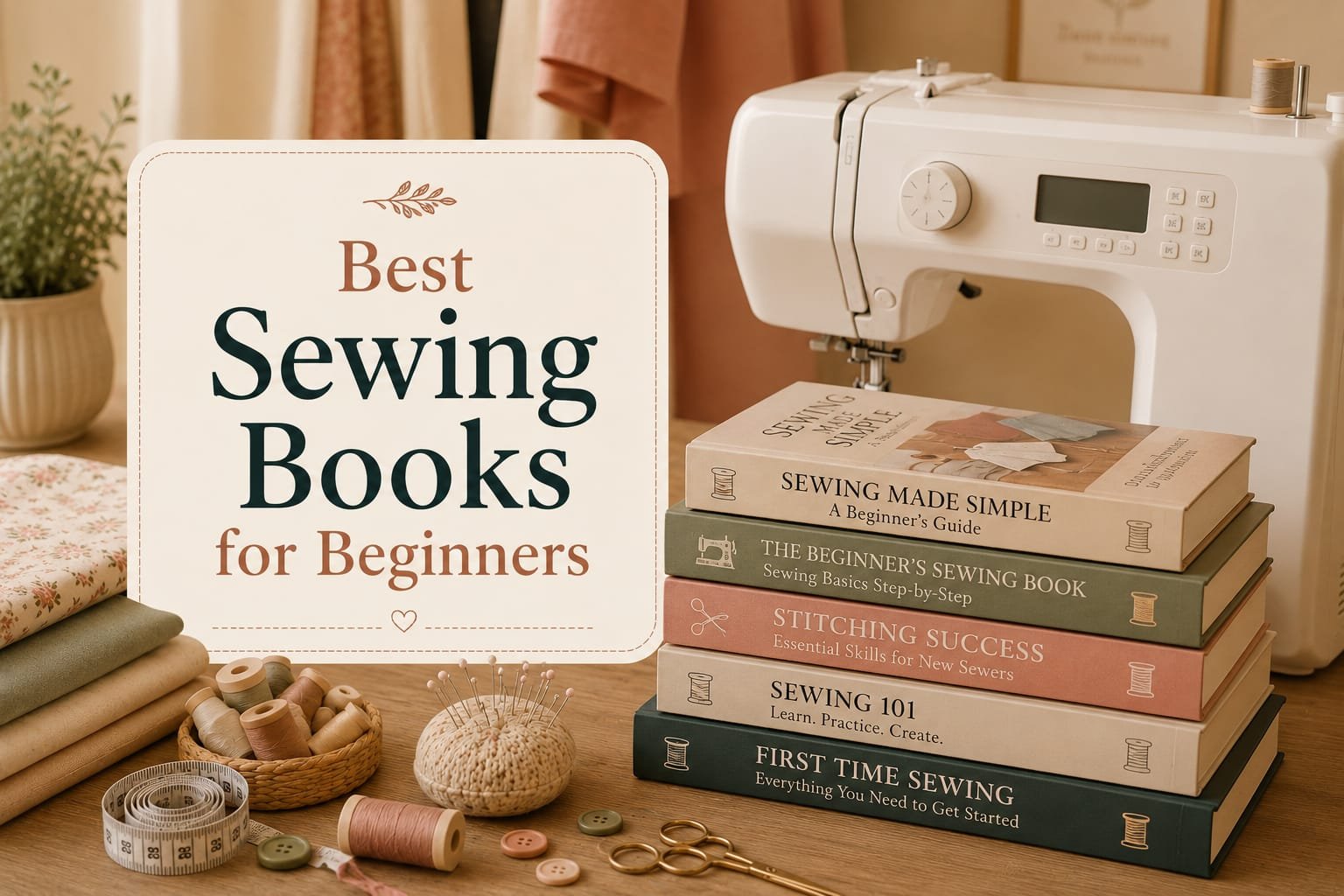
Starting with a sewing machine can feel confusing when every lever, stitch, presser foot, and pattern has a purpose. A good book makes the first steps easier by explaining the basics clearly.
The best sewing books for beginners cover more than machine operation. They explain essential techniques, fabrics, tools, patterns, and simple projects without overwhelming new sewists.
For this review, I compared the titles based on instruction quality, illustrations, project variety, and practical usefulness. Some serve as complete sewing references. Others focus on machine basics, dressmaking, or hands-on learning. This guide helps match each book to the beginner who will benefit most.
Why These Books Matter for Beginners
The right sewing book can make learning easier, from the first practice seam to confident projects. Clear explanations help beginners understand essential tools, fabrics, stitches, machine settings, and construction techniques without searching for each answer separately.
A useful guide also provides a practical reference when a sewing problem arises. A beginner may need help threading a machine today and guidance on seams, zippers, hems, or patterns later. Having these lessons in one place makes practice easier and more organized.
Not every learner has the same goal. Some want to make simple home projects, while others want to sew clothing or develop stronger sewing techniques. The books reviewed here offer different approaches so beginners can choose a guide that fits their skill level, learning style, and sewing goals.
Also read: How to Load Bobbin in Sewing Machine? Easy Steps
Best Sewing Books for Beginners
Choosing a sewing book can make learning easier, especially with clear instructions and practical examples. The books reviewed below were selected for different beginner needs: basic machine skills, step-by-step techniques, garment sewing, dressmaking, and hands-on projects. Each review covers the book’s strengths, limitations, and the type of learner it suits best.
1. Reader’s Digest Complete Guide to Sewing

For beginners comparing the Best Sewing Books for Beginners, the Reader’s Digest Complete Guide to Sewing is a well-rounded choice for those wanting more than basic machine instruction.
It covers step-by-step techniques for making clothes and home accessories, giving learners a foundation across different types of sewing. The broad coverage also makes it suitable as a reference as skills develop.
Overall, a practical choice among the Best Sewing Books for Beginners for anyone seeking a comprehensive guide that supports early learning and ongoing sewing practice.
Pros
Cons
2. Creative Publishing First Time Sewing Book

First Time Sewing is a practical choice for anyone starting with a sewing machine. Its beginner-focused approach keeps learning approachable. Clear instructions help new sewists understand essential techniques before starting projects. For those unsure where to begin, the straightforward format makes practice less intimidating.
The book works well as an introductory guide, not a detailed reference for advanced techniques. Experienced sewists may find the coverage too basic beyond foundational skills.
It is a sensible starting point for learners who want a simple introduction before tackling more involved sewing projects.
Pros
Cons
3. Sewing For Dummies

Sewing For Dummies offers a straightforward introduction for beginners who want to understand sewing without technical language. The book covers essential skills and practical techniques in an accessible format, useful for learners who need clear explanations and want to build confidence at the machine.
Its broad coverage is a strength, especially for someone who wants one guide for several basic sewing tasks. However, readers focused on modern garment construction or advanced techniques may need a more specialized reference.
A dependable introductory guide and practical choice among the Best Sewing Books for Beginners for readers who prefer simple explanations and broad coverage.
Pros
Cons
4. The Sewing Book: Over 300 Step-by-Step Techniques

The Sewing Book is a strong choice for beginners who learn best through detailed visual instruction. Its focus on more than 300 step-by-step techniques gives learners a broad reference for practicing stitches, construction methods, and everyday sewing skills. The visual format also makes it easier to follow a technique while working at the machine or sewing table.
Its main advantage is the depth of technique coverage. However, the large amount of information may overwhelm those seeking only a short introduction. Beginners may find it more useful as both a learning guide and a reference as their skills develop.
A valuable option among the Best Sewing Books for Beginners, especially for learners seeking detailed visual guidance and a reference that grows with their skills.
Pros
Cons
5. Sew Everything Workshop

Sew Everything Workshop is a practical choice for beginners who learn best by making projects. The book combines step-by-step instructions with 25 original designs and 10 patterns. It offers new sewists many opportunities to practice techniques while creating useful items.
Its project-based format can make learning feel more rewarding than reading technique after technique. However, readers who want a detailed reference covering a wide range of specialized sewing methods may eventually need another guide.
A useful choice among the Best Sewing Books for Beginners for anyone who prefers learning through practical projects instead of theory.
Pros
Cons
6. New Complete Guide to Sewing

New Complete Guide to Sewing is a practical reference for beginners exploring both clothing and home sewing. Its step-by-step approach helps learners master fundamental techniques while gradually building confidence with various projects and construction methods.
The broader focus helps learners who do not yet know which type of sewing they prefer. However, its wide coverage may feel less focused than a book designed for absolute beginners or a specific sewing niche.
It is a solid option among the best sewing books for beginners, especially for learners who want one reference covering both garment and home sewing.
Pros
Cons
7. Ultimate Illustrated Guide to Sewing Clothes

Ultimate Illustrated Guide to Sewing Clothes is best suited to beginners focused on garment making. It goes beyond basic machine use and covers patterns, fitting, zippers, notions, tailoring, alterations, and other clothing techniques.
The garment-focused approach gives this guide an advantage for learners who want to progress from simple sewing skills to making better-fitting clothes. However, the wide range of topics may feel demanding for someone who has never used a sewing machine.
It is a strong choice among the best sewing books for beginners who want to develop garment-making skills and eventually tackle more detailed clothing projects.
Also Read: How to Sew an Invisible Zipper? Full Guide
Pros
Cons
8. Sewing 101, Revised and Updated

Sewing 101, Revised and Updated uses a structured approach to teach foundational sewing skills. Its step-by-step format makes it practical for beginners seeking clear guidance before tackling more advanced techniques and projects.
Its focus on basic skills is the main strength. It helps new sewists build a solid foundation without rushing into complicated construction. However, learners interested in advanced garment fitting or specialized techniques may need a more focused reference later.
It is a practical option among the best sewing books for beginners, especially for learners who want a structured introduction to essential sewing skills before moving on.
Pros
Cons
9. Simplicity’s Simply the Best Sewing Book

Simplicity’s Simply the Best Sewing Book is a practical choice for beginners seeking a general introduction to sewing. Its straightforward approach helps new sewists learn essential techniques before tackling more complex projects.
The book serves best as a foundational guide rather than a specialized manual. Beginners interested in advanced garment fitting, tailoring, or specific techniques may need a more detailed reference later.
It is a sensible choice among the best sewing books for beginners, especially for readers seeking a general sewing reference without highly technical material.
Pros
Cons
10. The Beginner’s Guide to Dressmaking

The Beginner’s Guide to Dressmaking is a focused choice for new sewists who want to make their own clothes. Rather than covering sewing broadly, it focuses on dressmaking techniques and patterns, making it especially useful for learners interested in garments.
Its focused approach helps beginners move from basic sewing skills to practical clothing projects. However, readers seeking guidance on home accessories, general machine operation, or broader sewing techniques may find its scope narrower than a comprehensive guide.
Overall, a strong option among the best sewing books for beginners for learners aiming to understand dressmaking and create their own clothing.
Pros
Cons
Best Sewing Books for Beginners: Comparison Table
The right sewing book depends on how a beginner prefers to learn. Some need straightforward machine and technique instruction, while others benefit from hands-on projects, visual guidance, or a focused path to garment sewing. The comparison below highlights each guide’s main strengths, learning focus, and level.
| Book | Best For | Main Strength | Project / Technique Focus | Beginner Level | Potential Limitation |
|---|---|---|---|---|---|
| Reader’s Digest Complete Guide to Sewing | All-around sewing | Broad coverage of clothing, home sewing, and techniques | Techniques + projects | Beginner to intermediate | May feel extensive for absolute beginners |
| First Time Sewing | Complete beginners | Simple, approachable instruction | Basic techniques + introductory projects | Beginner | Limited depth beyond foundational skills |
| Sewing For Dummies | Easy-to-understand learning | Clear explanations without heavy technical language | Fundamental skills + practical sewing | Beginner | Less specialized for advanced garment sewing |
| The Sewing Book: Over 300 Step-by-Step Techniques | Visual learners | Extensive technique reference with detailed guidance | 300+ techniques | Beginner to intermediate | Large amount of information can feel overwhelming |
| Sew Everything Workshop | Project-based learning | 25 projects and 10 patterns encourage practical learning | Projects + patterns | Beginner | Not designed as an advanced reference |
| New Complete Guide to Sewing | General sewing skills | Covers clothing and home sewing in one reference | Techniques + projects | Beginner to intermediate | Broad rather than highly specialized |
| Ultimate Illustrated Guide to Sewing Clothes | Garment sewing | Strong coverage of patterns, fitting, zippers, and alterations | Garment sewing | Beginner to intermediate | Can be demanding for someone completely new |
| Sewing 101, Revised and Updated | Learning the basics | Structured, step-by-step foundation | Essential techniques | Beginner | May become too basic as skills progress |
| Simplicity’s Simply the Best Sewing Book | General beginners | Straightforward introduction to essential skills | Basic techniques + projects | Beginner | Limited advanced and specialized instruction |
| The Beginner’s Guide to Dressmaking | Dressmaking | Focused instruction for making clothing | Dressmaking + patterns | Beginner to intermediate | Narrower than an all-purpose sewing guide |
Which Sewing Book Should a Beginner Choose?
The most suitable book depends on the learner’s starting point and sewing type. Reader’s Digest Complete Guide to Sewing is a versatile option for someone wanting a broad reference covering techniques, clothing, and home sewing. Its wide scope makes it useful as skills develop.
For someone new to sewing, First Time Sewing offers a simple introduction to foundational techniques. Its approachable format makes the first stages of learning easier.
Learners who prefer practical projects may find Sew Everything Workshop more engaging because it combines instruction with projects and patterns. The Sewing Book: Over 300 Step-by-Step Techniques suits visual learners who want detailed technique guidance and a reference for future projects.
For garment-focused learning, Ultimate Illustrated Guide to Sewing Clothes provides more attention to patterns, fitting, zippers, tailoring, and alterations. The Beginner’s Guide to Dressmaking is another focused option for those whose main goal is learning how to construct clothing.
A practical approach is to choose a sewing book based on how the learner prefers to study and the projects they plan. A focused beginner guide can be more useful during early projects than a large reference covering every technique at once.
How to Choose a Sewing Book for Beginners
A beginner book should match the type of sewing the reader wants to learn. Someone interested in tote bags and home décor may need a different guide than someone who wants to make clothing.
Start With the Right Skill Level
Absolute beginners should look for clear explanations of basic tools, machine setup, threading, bobbin use, fabric handling, and straight stitching.
A useful guide should explain why a technique works, not only what to do. Clear diagrams can also make unfamiliar sewing movements much easier to understand.
Also Read: Best Sewing Scissors: Top Picks 2026
Consider the Type of Projects
Think about the first few projects to make. The right book will support those goals instead of covering techniques you won’t need yet.
Also Read: How to Sew a Rip? Easy 6- Step Guide
Also Read: How to Sew a Pillow: Easy Guide for Beginners
Check the Visual Instruction
Photos and diagrams matter when learning a hands-on skill. Written instructions might tell a beginner to pivot at a corner, but an illustration shows exactly when and where that movement happens.
Books such as The Sewing Book and Reader’s Digest Complete Guide to Sewing are worth considering when visual reference is a priority.
Look for Room to Grow
A very basic manual may work well during the first weeks but become limiting as skills develop. A large reference can feel overwhelming to someone who has never threaded a machine.
For many learners, the best choice is a beginner-friendly guide that also introduces techniques for later projects.
Match the Book to the Sewing Machine
A general sewing guide should explain principles that apply across machines. Controls vary between models, but concepts like threading, bobbin insertion, stitch length, tension, seam allowances, and needle selection remain useful.
The sewing machine manual should remain the primary reference for model-specific controls, settings, and maintenance. A general book can teach the sewing skill, while the machine manual explains how that particular machine performs it.
Also Read: Best Mechanical Sewing Machine: Our Top Pick 2026
What Should a Beginner Learn First?
A good book can give you direction, but you do not need to master everything at once.
I recommend learning these skills in this order:
- Identify your machine’s main parts.
- Learn how to wind and insert the bobbin.
- Practice threading the machine.
- Learn how to control your fabric while sewing straight lines.
- Understand seam allowances.
- Practice backstitching and basic seam finishing.
- Learn how to press seams correctly.
- Try a simple project.
- Practice changing needles and basic machine settings.
- Move into zippers, curves, gathers, and garment techniques.
Do not rush the early steps. Straight seams and accurate pressing may seem basic, but they affect almost every project you make later.
Also Read: What Is a Basting Stitch in Sewing? Easy Guide
Also Read: 10 Best Iron for Sewing: Top-Rated Picks 2026
Also read: How to Replace a Sewing Machine Needle? Easy Guide
Do You Need a Sewing Book If You Watch YouTube?
Not necessarily, but having a reliable reference can make learning easier.
Videos are excellent for watching movements, such as threading a machine or sewing a curved seam. A book is easier to revisit, mark with notes, and use as a quick reference without searching for the same lesson again.
A strong combination beats relying on one format. Use the machine manual for model-specific instructions, a book for sewing fundamentals, and videos to see a technique performed.
That gives beginners several practical ways to solve problems without depending entirely on one source.
Also read: Why Does My Sewing Machine Keep Jamming? Easy Fixes
Common Mistakes When Buying a Sewing Book
Choosing an Advanced Book Too Early
A detailed dressmaking guide may look impressive, but it can overwhelm someone who has never used a sewing machine.
Match the book to your current skill level, not the level you hope to reach. A clear beginner guide usually makes the first lessons easier to follow.
Buying Only for the Cover
An attractive cover does not tell you whether the instructions will suit your learning style.
Check the contents, project types, illustrations, and level of detail before making a decision. These details give a better idea of how useful the book will be at the sewing table.
Ignoring Your Sewing Goals
A general reference may not be the best fit if the main goal is garment sewing. Likewise, a dressmaking guide may offer more information than needed for clothing repairs or simple home projects.
Think about what you want to make first, then choose a book that supports those skills.
Buying Too Many Books at Once
A beginner does not need a complete sewing library on day one.
Start with one dependable guide and use it regularly. When your learning style and interests become clearer, another book can fill a specific gap.
Final Recommendation
The best choice depends on the learner’s goals, experience, and preferred practice method. For a broad foundation, Reader’s Digest Complete Guide to Sewing offers balanced coverage of techniques, clothing, and home sewing.
Beginners seeking a simpler start may prefer First Time Sewing. Project-oriented learners can benefit from Sew Everything Workshop. For those mainly interested in clothing, Ultimate Illustrated Guide to Sewing Clothes and The Beginner’s Guide to Dressmaking offer focused guidance on garment construction.
The Sewing Book: Over 300 Step-by-Step Techniques is useful for anyone who values detailed visual references. A good sewing book should make the learning process clearer without adding complexity.
Choosing a guide that matches your intended projects and learning style can build a stronger foundation and remain useful as your sewing skills improve.