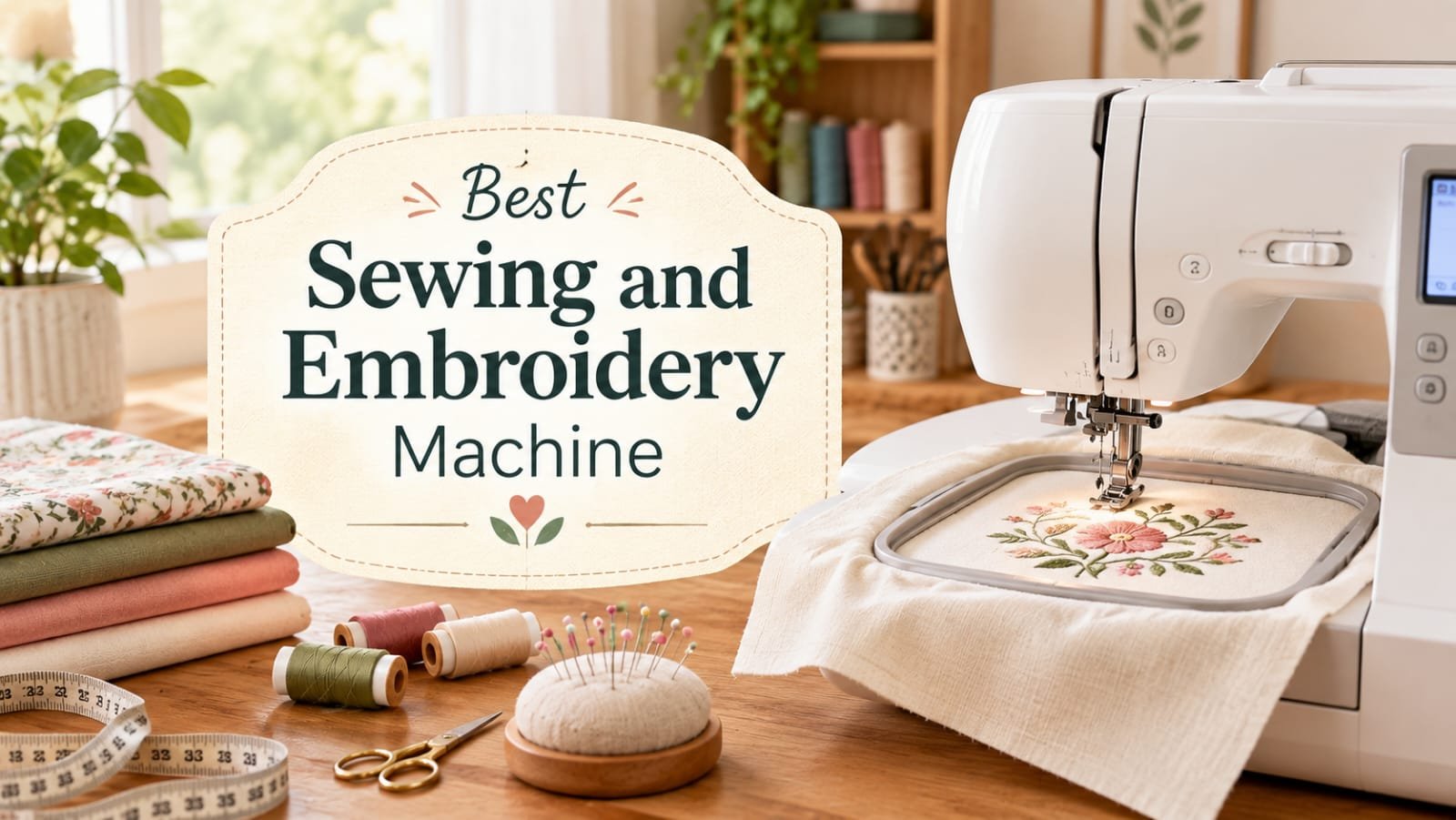
Best Sewing and Embroidery Machine Review 2026
Choosing a machine that can sew garments, personalize gifts, and create embroidery designs can feel more complicated than it needs to be. A low price does not always mean better value. A long feature list does not always make learning easier.
The best sewing and embroidery machine depends on your projects, workspace, embroidery area, budget, and comfort with digital features. A beginner stitching names on shirts needs different capabilities than a quilter or home-business owner.
This guide focuses on practical value, embroidery hoop sizes, sewing capability, connectivity, design options, and long-term usefulness.
Also Read: Top 10 Best Sewing Machines for Intermediate Sewers
Key Takeaways
Quick Answer: Which Machine Should You Buy?
For beginners wanting sewing and embroidery in one machine, the Brother SE700 is a sensible start. It combines 103 sewing stitches, 135 built-in embroidery designs, a 4 × 4-inch embroidery field, wireless LAN, and a touchscreen interface.
The compact embroidery area suits monograms, names, small motifs, and personalized projects rather than oversized designs. For users working with larger garment designs, jacket details, quilt blocks, or elaborate embroidery.
The Brother SE2000 is a stronger long-term option. Its 5 × 7-inch embroidery field offers more space, while 241 sewing stitches, 193 built-in embroidery designs, wireless connectivity, and embroidery speeds up to 650 stitches per minute provide more flexibility.
Also Read: How to Sew Binding on a Quilt? Step-by-Step Guide
When embroidery is the main priority, the Brother PE545 and PE900 offer a more focused solution. The PE545 has a 4 × 4-inch embroidery field and is well suited to smaller projects, while the PE900 increases the working area to 5 × 7 inches for larger designs.
For experienced sewists looking for a premium combination machine, the Janome Horizon Memory Craft 9850 is a strong contender. It provides a 6.7 × 7.9-inch maximum embroidery area, 200 sewing stitches, 175 embroidery designs, automatic thread cutting, and sewing speeds of up to 1,000 stitches per minute.
Ultimately, the right choice depends less on the number of built-in designs and more on how the machine will be used. A compact combination model suits occasional personalization and everyday sewing, while a larger embroidery field is more valuable for garments, quilts, home décor, and frequent embroidery.
How These Machines Were Chosen
A useful comparison requires more than price and customer ratings. We evaluated each machine based on factors affecting everyday sewing, embroidery, ease of use, and versatility over time.
The main factors include:
The intended project also plays an important role. A 4 × 4-inch hoop handles monograms, small logos, baby clothing, pockets, and many decorative designs. Larger hoops suit quilts, jackets, bigger shirt designs, and home décor projects.
Best Sewing and Embroidery Machines
| Machine | Type | Embroidery Area | Built-In Embroidery Designs | Sewing Stitches | Connectivity | Best For |
|---|---|---|---|---|---|---|
| Brother SE700 | Sewing + Embroidery | 4 × 4 in | 135 | 103 | Wireless LAN | Beginners wanting both functions |
| Brother SE400 | Sewing + Embroidery | 4 × 4 in | 70 | 67 | — | Basic sewing and small embroidery |
| Poolin EOC05 | Embroidery Only | 4 × 9.25 in | — | — | Wi-Fi, USB | Beginners needing a larger hoop |
| Brother PE900 | Embroidery Only | 5 × 7 in | — | — | Wireless LAN | Larger embroidery designs |
| Poolin EOC06 | Embroidery Only | 7.9 × 11 in | — | — | — | Large garment and quilt designs |
| Brother PE545 | Embroidery Only | 4 × 4 in | 135 | — | Wi-Fi, USB | Monograms and personalized gifts |
| Brother SE2000 | Sewing + Embroidery | 5 × 7 in | 193 | 241 | Wireless | Advanced home sewing and embroidery |
| Poolin EOC07 | Embroidery Only | 15 × 7.9 in | 200 | — | Wi-Fi, USB | Oversized embroidery and business projects |
| Janome Horizon Memory Craft 9850 | Sewing + Embroidery | 6.7 × 7.9 in | 175 | 200 | — | Experienced sewists |
| Brother Inno-vis NQ1700E | Embroidery Only | 6 × 10 in | — | — | Wireless | Serious embroidery and larger projects |
Best Sewing and Embroidery Machine
We selected the machines below based on embroidery area, sewing capability, built-in designs, connectivity, ease of use, and versatility.
The selection includes combination models for users who want sewing and embroidery in one machine and embroidery-only options for those who already have a dependable sewing machine.
Comparing these features helps you find a model that matches your projects, workspace, and experience level.
1. Brother SE700 Sewing and Embroidery Machine Review

The Brother SE700 is a versatile combination machine for users who want sewing and embroidery in one setup. It offers 103 sewing stitches, 135 built-in embroidery designs, a 4 × 4-inch embroidery field, and a 3.7-inch touchscreen.
Wireless LAN simplifies design transfers, and computerized controls make routine adjustments easier. As one of the Best Sewing & Embroidery Machines, it offers useful features for beginners and home sewists.
However, the 4 × 4-inch embroidery area limits larger jacket, quilt, and garment designs. Advanced users may find its capabilities limited compared to higher-end combination models.
A practical option for beginners seeking a capable sewing and embroidery machine for everyday projects.
Also Red: Best Sewing Machine for Apparel: Top 10 Picks
Pros
Cons
2. Brother SE400 Sewing and Embroidery Machine Review

The Brother SE400 is a combination machine for users who want basic sewing and embroidery in one unit. It offers 67 built-in sewing stitches, 70 embroidery designs, five lettering fonts, and a 4 × 4-inch embroidery area.
The computerized controls make stitch selection and embroidery setup easy for beginners. Among the best sewing and embroidery machines, it suits smaller projects, monograms, and decorative details.
However, its older design and limited 4 × 4-inch embroidery area may feel restrictive for larger or advanced work. The higher price also lowers its value compared with newer models with more features.
A capable option for basic sewing and small embroidery projects, but newer combination machines may offer better overall value.
Pros
Cons
3. Poolin EOC05 Embroidery Machine Review

The Poolin EOC05 is an embroidery-focused machine designed for beginners who want more room than a standard 4 × 4-inch hoop provides. It offers a 4 × 9.25-inch embroidery area, 7-inch touchscreen, Wi-Fi and USB design transfer, two hoops, and a starter kit.
The larger field suits names, shirt designs, personalized gifts, and longer decorative patterns. For users comparing Best Embroidery Machines, the EOC05 is worth considering when embroidery space is a priority.
Its main limitation is that it is not a combination sewing machine, so a separate machine is needed for regular sewing. Beginners may need time to get comfortable with digital embroidery functions.
A practical option for beginners who prioritize a larger embroidery field.
Pros
Cons
4. Brother PE900 Wireless Embroidery Machine Review

The Brother PE900 is an embroidery-only machine for users who want more space for detailed, larger designs. It offers a 5 × 7-inch embroidery field, WLAN connectivity, and a touchscreen interface that makes design transfer and on-machine editing easier.
For those comparing Best Sewing & Embroidery Machines, the PE900 is a strong choice when embroidery is the main focus and sewing functions are unnecessary.
Its main limitation is that it cannot sew, so a separate sewing machine is needed for garments and general sewing projects. The larger embroidery area also means a higher price than basic 4 × 4-inch models.
A capable option for users who want a dedicated embroidery machine with useful connectivity and a larger working area.
Also Read: Can You Embroider With a Sewing Machine? Easy Guide
Pros
Cons
5. Poolin EOC06 Embroidery Machine Review

The Poolin EOC06 is designed for home creators who want a larger embroidery workspace than entry-level models offer. Its 7.9 × 11-inch embroidery area suits larger garment designs, quilt blocks, jackets, and home décor projects.
The computerized touchscreen makes design positioning and editing easier, while the generous working area offers more flexibility. For anyone comparing the best embroidery machines, the EOC06 is especially appealing when embroidery size matters.
The main drawback is its higher price, which may be hard to justify for occasional embroidery. It is primarily an embroidery machine, so users needing regular sewing functions may need a separate machine. A capable choice for serious home embroidery where a large working area matters most.
Pros
Cons
6. Brother PE545 Wireless Embroidery Machine Review

The Brother PE545 is a compact embroidery-only machine for beginners and home crafters who already own a sewing machine. It includes 135 built-in designs, a 4 × 4-inch embroidery area, 10 font styles, a 3.7-inch touchscreen, USB connectivity, and wireless LAN.
Its straightforward controls and compact hoop suit monograms, names, small logos, and personalized gifts. For those comparing Best Sewing & Embroidery Machines, it is a sensible option when embroidery is the main focus.
The main limitation is the 4 × 4-inch embroidery field, which restricts larger designs. It does not provide sewing functions, so a separate machine is needed for garment construction. A practical choice for beginners who need dedicated embroidery without a large workspace.
Pros
Cons
7. Brother SE2000 Sewing and Embroidery Machine Review

The Brother SE2000 is a versatile combination machine for sewists who want substantial sewing and embroidery capability in one setup. It offers a 5 × 7-inch embroidery field, 193 built-in embroidery designs, 241 sewing stitches, wireless connectivity, and a touchscreen interface.
The larger hoop provides more flexibility for garment designs, monograms, quilt blocks, and personalized projects. For those comparing Best Sewing & Embroidery Machines, it offers a strong balance of everyday sewing and embroidery features.
Its main drawback is the higher price, which may exceed what beginners need. The 5 × 7-inch field is useful. However, users focused on very large embroidery designs may still need a dedicated larger-hoop machine. A capable long-term choice for home sewists who want advanced sewing and embroidery in one machine.
Pros
Cons
8. Poolin EOC07 Embroidery Machine Review

The Poolin EOC07 is designed for creators who need a large embroidery area for clothing, home décor, and business projects. It offers a 15 × 7.9-inch embroidery area, 200 built-in designs, four hoops, a 7-inch touchscreen, Wi-Fi, and USB design transfer.
This large workspace is particularly useful for oversized motifs and multi-size projects. Its main drawback is that it is embroidery-only, requiring a separate sewing machine for regular stitching. The larger setup and higher price may also exceed casual users’ needs.
A capable choice among Best Embroidery Machine for serious embroidery work, home businesses, and creators who regularly handle larger designs.
Pros
Cons
9. Janome Horizon Memory Craft 9850 Review

The Janome Horizon Memory Craft 9850 is a versatile combination machine for experienced sewists seeking strong sewing and embroidery performance in one unit. It offers 200 built-in stitches, 175 embroidery designs, and a maximum embroidery area of 6.7 × 7.9 inches.
Automatic thread cutting and a sewing speed of up to 1,000 stitches per minute add convenience for detailed projects. Its main drawback is the higher price, which may not suit beginners or occasional users.
The machine also has a learning curve due to its wide range of functions and computerized controls. A capable choice among Best Sewing & Embroidery Machines for experienced sewists who want greater embroidery space and advanced sewing functions.
Pros
Cons
10. Brother Inno-vis NQ1700E Review

The Brother Inno-vis NQ1700E is an embroidery-only machine for users needing a larger working area and reliable digital control. Its 6 × 10-inch embroidery field offers space for larger garment designs, quilt blocks, and decorative projects. Wireless connectivity and embroidery software compatibility make transferring and preparing designs easier.
The main drawback is the higher price, placing it in the high-end category. It lacks conventional sewing functions, so a separate machine is needed for garment construction and everyday stitching.
A strong option among the best Embroidery Machine for serious embroidery work, larger projects, and users who need more space than a 4 × 4 or 5 × 7-inch machine provides.
Pros
Cons
Buying Guide: How to Choose the Right Machine
Hoop Size: 4 × 4 vs. 5 × 7 vs. 6 × 10
Hoop size determines how large an embroidery design can be stitched in one setup, making it an important specification to consider before buying.
A 4 × 4 hoop works well for simple projects, but larger designs require repositioning or multiple hooping steps. Buyers planning to expand their projects over time will find a 5 × 7 or larger field more flexible.
Combo vs. Embroidery-Only: Which Fits Your Workflow?
The right configuration depends largely on how the machine will be used.
An embroidery-only machine is practical when a dependable sewing machine is already available. It allows the embroidery setup to focus entirely on decorative stitching, monograms, logos, patches, and personalized projects.
A combo sewing and embroidery machine is more versatile for users starting from scratch. One machine handles garment construction and embroidery, eliminating the need to buy separate equipment.
Also Read: Best Mechanical Sewing Machine: Our Top Pick 2026
How Many Built-In Designs Do You Really Need?
A large design library can be useful, but the number of built-in patterns should not determine your choice.
A machine with 100 well-chosen designs and strong editing tools may be more useful than one with hundreds of patterns that do not fit the intended projects.
Pay attention to:
Compatible software and online design libraries can also expand the available options after purchase.
Stitch Quality and Speed
Stitches per minute (SPM) indicates the machine’s maximum embroidery speed. A higher number can reduce stitching time on large projects, but speed alone does not guarantee embroidery quality.
Consistent fabric feeding, proper hooping, suitable stabilizers, correct thread tension, and appropriate stitching speed all contribute to clean results.
For beginners, reliable stitching and easy speed control are usually more valuable than choosing a machine solely for a high SPM rating.
Touchscreen, USB, and Wi-Fi
A touchscreen simplifies design selection, positioning, editing, and machine settings. USB connectivity remains useful since embroidery files transfer directly from a computer or storage device.
Wi-Fi adds convenience for users who frequently transfer designs. Brother connected models, for example, support wireless workflows through tools such as Design Database Transfer and Artspira.
Wireless capability is helpful but should not outweigh important factors like hoop size, stitch quality, editing functions, and overall usability.
Throat Space and Workspace
Throat space is the distance between the needle and machine arm. More workspace makes bulky projects easier to position and maneuver.
For embroidery alone, hoop size is usually the more important measurement. Anyone planning to sew quilts, coats, blankets, or other large projects should also consider available workspace.
The Brother NQ1700E, for example, offers 8.3 inches of space from the needle to the arm, giving larger projects more room to move.
Also read: How to Sew Drapes and Curtains: Easy Guide
Warranty, Support, and Software
A sewing and embroidery machine is a long-term craft investment, so manufacturer support deserves careful consideration.
Before purchasing, check:
Software support is particularly important for users creating or modifying custom designs. A machine can have strong hardware and still be difficult to use if the compatible software is limited or confusing.
Support should also be considered when comparing established manufacturers with lesser-known brands, especially if replacement parts or technical assistance may be needed later.
Also Read: How to Replace a Sewing Machine Needle? Easy Guide
Beginner Workflow: From Design to Finished Stitching
A consistent embroidery workflow helps beginners avoid common problems and achieve cleaner, more even results. The process begins with selecting a suitable design and ends with carefully removing the finished work from the hoop.
- Choose a design that fits the hoop. Check its dimensions before loading it onto the machine.
- Select the right stabilizer. Match the stabilizer to the fabric weight, stretch, and embroidery density.
- Hoop the fabric correctly. Keep it smooth and secure without pulling or stretching.
- Attach the hoop securely. Make sure it locks into position and moves freely.
- Thread the machine correctly. Follow the threading path specified in the machine manual.
- Check the bobbin and upper thread. Confirm both are properly inserted and have enough thread.
- Preview the design position. Use the machine’s positioning or preview function to confirm placement before stitching.
- Begin at a controlled speed. A moderate pace makes it easier to monitor the first stitches and spot problems early.
- Monitor the first few minutes. Watch for thread breaks, puckering, skipped stitches, or fabric shifting.
- Remove the hoop after stitching is complete. Stop the machine and carefully remove the finished embroidery to avoid disturbing the stitches.
Most common beginner problems often come from incorrect hooping, stabilizer selection, or threading rather than the machine itself. Proper preparation keeps the fabric stable without distortion and provides a better foundation for clean, consistent embroidery.
Also Read: How to Load Bobbin in Sewing Machine? Easy Steps
Embroidery Machine Maintenance and Troubleshooting
Regular maintenance helps protect stitch quality and machine performance.
Thread Keeps Breaking
Check the needle, upper threading, thread path, tension, and thread quality. A damaged or unsuitable needle can cause repeated breaks.
Dense designs increase friction. Slowing the machine may help.
Also Read: Why Does My Sewing Machine Keep Jamming? Easy Fixes
Bird Nests Under the Fabric
A tangled mass of thread under the fabric often points to incorrect upper threading, poor tension, or an improperly inserted bobbin.
Stop the machine before pulling the fabric. Cut the threads carefully. Rethread from the beginning.
Designs Look Misaligned
Check hoop stability and stabilizer selection. Loose hooping can allow fabric movement during stitching.
Large designs may need careful positioning before the first stitch.
Cleaning and Lubrication
Remove lint from accessible areas following the manufacturer’s instructions. Keep the bobbin area clean and use only the lubricant recommended for the machine.
Do not apply oil simply because a machine sounds noisy. Modern computerized machines may require specific maintenance procedures.
Final Thoughts
Choosing the best sewing and embroidery machine starts with matching it to the projects you do most often. A larger design library or higher stitch count does not make a model more suitable. Embroidery area, sewing capability, ease of use, connectivity, workspace, and long-term versatility are more useful factors when comparing machines.
For beginners who want sewing and embroidery in one machine, the Brother SE700 is a practical starting point for smaller projects like names, monograms, gifts, and decorative details. Those expecting to work with larger designs can benefit from the Brother SE2000, which provides a 5 × 7-inch embroidery field and broader sewing capabilities.
Users who already own a dependable sewing machine may find an embroidery-only model more practical. The Brother PE545 suits compact projects, while the Brother PE900 offers more embroidery space for larger designs. For frequent embroidery on jackets, quilt blocks, garment panels, or home décor, models like the Poolin EOC06, Poolin EOC07, and Brother Inno-vis NQ1700E offer considerably larger working areas.
Experienced sewists who want both functions in one machine can consider the Janome Horizon Memory Craft 9850. Its advanced sewing features and larger embroidery area suit users who expect varied projects and are comfortable with a feature-rich machine.
Before buying, consider the projects you make most often. A 4 × 4-inch hoop can be sufficient for personalization and small motifs, while a 5 × 7-inch or larger field offers greater flexibility for garments, quilts, and larger decorative designs. There is little benefit in paying for advanced features you will rarely use.
Ultimately, the right machine provides the embroidery space, sewing functions, controls, and flexibility needed for your projects while fitting the available workspace and budget. Focusing on these practical requirements makes it easier to choose a machine that remains useful as your sewing and embroidery skills develop.
Also read: 10 Best Sewing Books for Beginners: Top Picks 2026