10 Best Hand Sewing Needles for Every Sewing Project
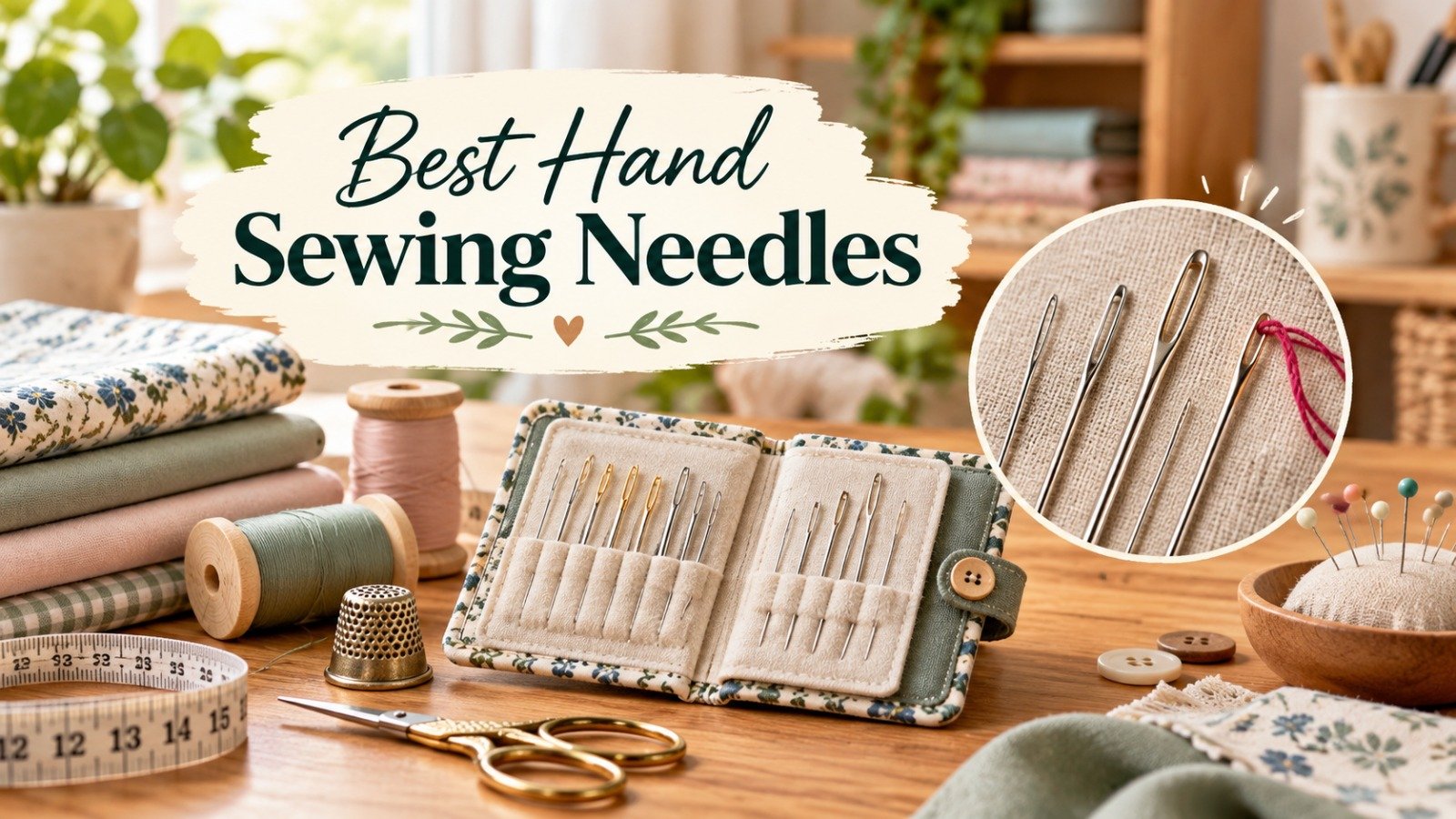
Choosing the right hand-sewing needle can make mending, embroidery, quilting, and everyday stitching easier. The best option depends on your fabric, thread thickness, needle point, and how easily the needle passes through the material.
This guide to the Best Hand Sewing Needles compares versatile needle sets, traditional sharps, embroidery needles, and specialty options for different sewing needs. You’ll learn what to look for, how needle sizes differ, and which features matter most when choosing needles for your projects..
Also Read: 10 Best Sewing Books for Beginners: Top Picks 2026
Key Takeaways
Quick Comparison: Top Hand Sewing Needle Sets
The table below compares popular hand sewing needle sets by needle count, key features, and intended use. Whether you need needles for everyday mending, embroidery, or various sewing projects, this overview can help you narrow your options.
| Needle Set | Best For | Count | Key Features |
|---|---|---|---|
| FIVEIZERO 40-Piece Set | General sewing and crafts | 40 | Seven sizes, large eyes, threaders |
| JollMono 35-Piece Set | Beginners and easier threading | 35 | Assorted sizes, large eyes, two threaders |
| FIVEIZERO 30-Count Set | Basic mending | 30 | Six sizes, large-eye needles, threaders |
| HTVRONT 56-Piece Set | Crafts and varied sewing tasks | 56 | Nine sizes, threader, thimble |
| SINGER 07370 Compact Set | Household repairs and travel | 30 | Assorted sizes, compact storage, threader |
| Fiskars 30-Piece Set | Different sewing techniques | 30 | Betweens, darners, embroidery needles, sharps |
| JollMono 60-Piece Set | Frequent mending and crafts | 60 | Six sizes, assorted sharp and large-eye needles |
| Colonial Needle Sharps | Fine, precise hand stitching | 20 | Traditional sharps in sizes 5 and 10 |
| SINGER 01125 Assorted Set | A variety of sewing techniques | 45 | Betweens, chenille, darners, embroidery, sharps, tapestry |
| JekiiNova 120-Piece Set | Group projects and frequent repairs | 120 | Six sizes and a large quantity of assorted needles |
How to Choose the Right Hand Sewing Needles
The right hand sewing needle should pass through fabric smoothly, carry the chosen thread comfortably, and provide good control while stitching. The best option depends on fabric, thread thickness, project type, and personal comfort. Consider these factors before choosing a set.
1. Match the Needle to the Fabric
Fabric thickness and construction help determine which needle will work best.
Also Read: How to Sew a Tear in Jeans: Easy Repair Guide
A thicker needle is not always better for heavy fabric. The point, shaft strength, and eye must fit the material and thread.
2. Check the Eye Size
The eye is the opening the thread passes through. A larger eye makes threading easier, especially with embroidery floss or thicker thread.
However, the eye and shaft should suit the fabric. A bulky needle can leave visible holes in delicate material, even with relatively fine thread.
For lightweight cotton, silk, and fine garments, choose a finer needle with a smaller eye. If threading is difficult, try a needle threader before switching to a larger needle.
Also Read: 10 Best Thread for Sewing: Ultimate Guide 2026
3. Consider the Needle Material
Many hand sewing needles are made of steel with a plated or coated finish. Stainless steel and nickel-plated steel are common descriptions, but the label alone cannot guarantee corrosion resistance or durability.
Look for straight shafts, smooth surfaces, clean points, and properly formed eyes. A well-finished needle should move through fabric without repeatedly snagging fibers.
Store needles in a dry case to protect them from moisture. Replace any needle that becomes bent, rusty, or rough at the point or eye.
4. Choose a Useful Size Range
A general-purpose assortment with several needle sizes is usually enough for basic sewing repairs. A broader selection helps if the kit supports embroidery, quilting, darning, or other needlework.
Sizing can be confusing at first. In many traditional systems, a higher number means a finer needle, while a lower number means a thicker one.
Check the package description for actual sizes included. Some multipacks advertise a high needle count without clearly stating how many needles come in each size.
5. Look for Useful Storage and Accessories
A well-organized sewing kit makes needles easier to find and store safely. Some practical accessories can also make hand sewing more comfortable.
Accessories are helpful, but needle suitability should remain the main buying consideration. A smaller set with the right sizes and a secure case may be more useful than a large assortment with needles that seldom match your projects.
6. Consider Needle Length and Shape
Needle length affects handling and control. Longer needles are useful for gathering, basting, and some decorative techniques. Shorter needles often offer better control for small, precise stitches.
Quilters commonly use short betweens for hand quilting. Embroiderers may prefer crewel needles, which have elongated eyes suited to embroidery thread.
Choose a length and shape comfortable for the intended technique. An easy-to-control needle helps produce more consistent stitches and reduces hand strain during longer sewing sessions.
Also Read: How to Sew Pleats? Easy Beginner Guide
7. Check Comfort and Durability
A suitable needle should move smoothly through fabric and not require excessive force. If it repeatedly catches the fabric, check if the point, size, or needle type is right.
Before purchasing a large assortment, review specifications and recent customer feedback. Look for comments about bending, rough finishes, damaged eyes, and inconsistent sharpness to spot potential quality issues.
Replace damaged needles rather than continue using them. A straight, smooth needle with a suitable point and eye is generally better than one chosen solely for price or quantity.
Best Hand Sewing Needles: Reviews
1. FIVEIZERO Premium Hand Sewing Needles Review

The FIVEIZERO sewing needle set is a practical choice for crafters who want the best hand sewing needles for everyday repairs, embroidery, and DIY projects. It includes stainless steel needles in seven sizes, large-eye options, and threaders to make threading easier.
The assortment also includes needles intended for leather and other craft applications, offering flexibility for different sewing tasks.
FIVEIZERO is worth considering for budget-conscious sewists who need a variety of needles for general crafts. For garment sewing, select the right needle size and type to avoid damaging delicate fabric.
Pros
Cons
2. JollMono Premium Large-Eye Hand Sewing Needles Review

The JollMono 35-piece needle set is a useful option for sewists seeking the best hand sewing needles for embroidery, clothing repairs, and craft projects. It includes assorted sizes, large-eye needles, and two threaders to make threading easier.
The larger eyes are especially helpful for those working with thicker thread or who find standard needles hard to thread.
JollMono is worth considering if easy threading is a priority. For fine garment repairs, choose smaller sharps made for the fabric rather than relying only on large-eye needles.
Pros
Cons
3. FIVEIZERO 30-Count Hand Sewing Needles Review

The FIVEIZERO 30-count needle kit is a compact option for anyone needing the best hand sewing needles for embroidery, hand quilting, and everyday craft projects.
It includes six assorted sizes of large-eye needles and threaders to make threading easier. This variety suits beginners and hobbyists who want different needle options without buying multiple packs.
This kit is a practical choice for budget-conscious sewists who want easy threading and a range of sizes. For precise garment repairs or fine fabrics, choose a needle suited to the material and stitching technique.
Also Read: How to Sew a Seam by Hand? Easy 5-Step Guide
Pros
Cons
4. HTVRONT Sewing Needles 56 PCS – Best for Everyday Hand Sewing

The HTVRONT 56-piece needle set is a versatile choice for sewists who need hand sewing needles for repairs, embroidery, quilting, and craft projects.
It includes nine needle sizes, a needle threader, and a thimble, useful accessories for a home sewing kit. The large-eye design makes threading easier, especially with thicker threads.
HTVRONT is a solid choice for beginners and hobbyists who want a varied needle set with useful accessories. For fine garment sewing, choose a smaller needle that matches the fabric and thread.
Pros
Cons
5. SINGER 07370 Hand Sewing Needles – Best for Everyday Repairs

The SINGER 07370 needle set is a practical choice for anyone looking for the best hand sewing needles for everyday mending, clothing repairs, and basic sewing projects.
It contains 30 assorted needles in a compact storage case and includes a needle threader for added convenience. The organized design keeps sewing essentials together at home or in a travel sewing kit.
SINGER 07370 is worth considering if you prefer organized storage and a trusted sewing brand. However, compare the price with other needle sets and check that the included sizes suit your sewing needs.
Also Read: How to Sew a Rip? Easy 6- Step Guide
Pros
Cons
6. Fiskars 30-Piece Sewing Needle Set – Best for Multiple Sewing Tasks

The Fiskars 30-piece sewing needle set is a useful option for sewists who need hand sewing needles for clothing repairs, embroidery, and everyday stitching.
It includes assorted betweeners, darners, embroidery needles, and sharps in sizes 2–7, plus a needle threader and storage container. This selection offers flexibility for common sewing tasks without needing several separate packs.
Fiskars is worth considering if you want a compact, organized set with useful needle types. However, check the included sizes against your fabric and thread needs before buying.
Pros
Cons
7. JollMono 60-Pack Sewing Needles – Best for Variety

The JollMono 60-pack is a versatile choice for anyone looking for the best hand sewing needles for clothing repairs, embroidery, and everyday craft projects.
It includes six assorted needle sizes and six large-eye needles to make threading easier. This variety suits both beginners and experienced sewists who want multiple needle options in one set.
JollMono is worth considering if you want assorted sizes and large-eye needles in one pack. For fine garment sewing, pick a needle that matches your fabric weight and thread thickness.
Pros
Cons
8. Colonial Needle Sharps Hand Needles – Best for Precise Stitching

Colonial Needle Sharps, available in sizes 5–10, are a focused option for sewists seeking the best hand-sewing needles for clothing repairs, hemming, and everyday stitching. This pack contains 20 sharps, a traditional needle type suited to general hand sewing through woven fabrics.
Unlike large assorted kits, it focuses on needle style, making it practical for projects needing precise, controlled stitches.
Colonial Needle Sharps are worth considering for routine garment sewing and precise hand stitching. Choose the right size for your fabric and thread, and compare the pack price with larger sets if value matters.
Pros
Cons
9. SINGER 01125 Assorted Hand Needles Review

The SINGER 01125 Assorted Hand Needles set is a versatile choice for anyone who needs hand-sewing needles for everyday repairs, embroidery, and other sewing projects.
It includes 45 needles in assorted sizes and types, including betweens, chenille, darners, embroidery, sharps, and tapestry needles. This variety suits both beginners and experienced sewists working with different fabrics and stitching techniques.
This set is practical for general hand sewing and craft projects. If you mainly sew clothing, a pack of sharp needles in suitable sizes may be more convenient.
Pros
Cons
10. JekiiNova 120-Pack Premium Hand Sewing Needles Review

The JekiiNova 120-pack is a budget-friendly option for hand sewing needles for clothing repairs, embroidery, and everyday stitching. It includes 120 needles in six assorted sizes, providing a useful variety for beginners, hobbyists, and home sewists.
The large-eye needles make threading easier, especially with thicker thread. These assorted needles are a solid choice for a general sewing kit, especially if you need several sizes at an affordable price.
Check needle sharpness and finish before use. Use specific needle types for delicate fabrics or specialized stitching.
Pros
Cons
Hand Sewing Needle Buying Guide
The right hand sewing needle makes stitching easier, protects fabric, and supports neat, consistent results. The best choice depends on fabric weight, thread thickness, stitch type, and how much control the project needs.
For everyday repairs, a general-purpose sharp needle is a good starting point. Embroidery, hand quilting, cross-stitch, and leatherwork often require specialized needles with different points, eyes, or lengths.
Understanding these differences helps beginners choose the right tools without buying a large assortment.
1. Check the Needle Material
Most traditional hand sewing needles are made of steel and may have a plated or polished finish. The finish quality, shaft smoothness, and point condition affect how comfortably a needle moves through fabric.
Choose needles with a smooth surface and a properly formed point. Store them in a dry needle case or book to reduce moisture exposure. Replace any needle that develops rust, roughness, or visible damage.
2. Match the Needle Point to the Fabric
The point determines how the needle enters the material. Choosing a suitable point can reduce snagging and help preserve the fabric’s structure.
For delicate woven fabric, start with a fine, sharp needle. For leather, use a suitable leatherworking needle and test it on a scrap because its cutting point can leave permanent holes.
Also Read:How to Hand Sew Patches? An Easy Guide
3. Choose the Correct Eye Size
The eye must accommodate the thread without friction. An eye that is too small can fray the thread or make threading difficult, while a large eye may leave marks in delicate fabric.
For ordinary sewing thread, a standard sharp needle is often suitable. Embroidery floss usually works better with a crewel needle because its longer eye accommodates multiple strands. Tapestry needles have a larger eye for embroidery yarn and similar threads.
If threading is difficult, use a needle threader rather than forcing thick thread through a small eye.
4. Consider Needle Length and Shape
Needle length affects how the tool feels in the hand and how much control it provides.
Short betweens, also called quilting needles, are popular for hand quilting because they support small, controlled stitches. Longer milliners’ needles are useful for gathering, pleating, and selected decorative techniques. Darning needles provide additional length for weaving repair thread across worn areas.
Also Read: What Is a Basting Stitch in Sewing? Easy Guide
Choose a length that feels comfortable and suits the movement required for the technique.
5. Select a Suitable Needle Size
Hand sewing needle sizes can seem confusing because in many traditional systems a higher number indicates a finer needle. For example, a size 10 sharp is finer than a size 5 sharp.
The exact dimensions and available sizes vary by needle category and manufacturer. For example, a size 10 tapestry needle should not be assumed to match a size 10 sharp in length or diameter.
For beginners, a small assortment of general-purpose sharps in several sizes is a practical choice. Add specialist needles as needed for specific projects.
6. Look for Useful Accessories
A few simple accessories can make hand sewing easier and safer.
Choose accessories that suit the type of sewing you’re doing and avoid buying tools that you may rarely use.
Also Read: Best Sewing Scissors: Top Picks 2026
7. Check Comfort and Condition
A suitable needle should move through the fabric without repeated snagging or excessive force. If a needle bends while sewing, stop and choose one better suited to the material and number of layers.
Check the needle’s point and shaft before starting. Replace needles that are bent, rusty, rough, or damaged. Customer reviews may offer insight into product consistency, but descriptions alone cannot guarantee durability.
Hand Sewing Needle Types and Sizes Chart
Hand sewing needles are designed for different materials and techniques. The following chart explains the main categories and their common uses.
Common Hand Sewing Needle Types
| Needle Type | Main Features | Common Uses |
|---|---|---|
| Sharps | Medium length, sharp point, small eye | General sewing, hems, buttons, and repairs |
| Embroidery or crewel | Sharp point and longer eye | Embroidery floss and decorative stitching |
| Betweens | Short shaft and sharp point | Hand quilting and controlled stitching |
| Milliners or straws | Long, slender shape | Gathering, pleating, and selected decorative stitches |
| Tapestry | Blunt point and large eye | Cross-stitch, needlepoint, and counted-thread work |
| Chenille | Sharp point and large eye | Ribbon embroidery and thicker decorative threads |
| Darners | Longer body and usually a larger eye | Darning, patching, and textile repairs |
| Leather or glovers | Cutting point designed for leather | Leatherwork and selected leather repairs |
| Self-threading | Special opening for inserting thread | Convenient threading for suitable sewing tasks |
Needle names can overlap slightly between brands, so check the manufacturer’s description when buying a specialist type.
Hand Sewing Needle Size Guide
This table gives a broad starting point for understanding traditional size numbering. It is not a universal conversion chart.
| General Size Range | Relative Thickness | Typical Guidance |
|---|---|---|
| Sizes 1–3 | Generally thicker | Some heavier hand-sewing tasks; confirm the needle type |
| Sizes 4–6 | Medium to thick | General sewing and selected heavier materials |
| Sizes 7–9 | Fine to medium | Many garment repairs and everyday stitching |
| Sizes 10–12 | Generally finer | Delicate stitching and fine materials |
These ranges are approximate. The right size depends on the needle category, fabric, and thread. Consult the manufacturer’s size chart when you need exact dimensions or a specific size recommendation.
Which Hand Sewing Needles Suit Different Fabrics?
Cotton and Linen
A sharp needle is a reliable starting point for woven cotton and linen. Medium-weight fabrics generally accommodate a general-purpose sharp needle, while fine cotton and lightweight linen often need a thinner needle to avoid visible holes.
Choose a needle that passes through the fabric cleanly without pulling the weave out of shape.
Knits and Stretchy Fabrics
Knitted fabrics require care because their loops can snag or split. A needle intended for the specific knit or hand-sewing technique is the best starting point.
Ballpoint needles are widely used for machine sewing on knits. For hand sewing, select an appropriate needle and test it on a scrap. Avoid forcing the point through loops if it catches or damages the material.
Denim and Canvas
Heavy woven fabrics need a sturdy, properly sized needle. A stronger, sharp needle may work for ordinary denim repairs, while thick seams or canvas may require a specialist hand-sewing needle.
Use a thimble for additional comfort when pushing through several layers. If the needle bends or requires excessive force, reassess the needle type and stitching method.
Also Read: How to Sew on a Patch? Easy Step-by-Step Guide
Leather and Vinyl
Leather and some vinyl materials require needles designed for the material. Leatherworking needles often have a cutting point that helps penetrate dense surfaces.
Because these points can create permanent holes, test the needle on a scrap before working on the finished item. Do not substitute an ordinary sharp if the project requires a specialist leather needle.
Embroidery and Cross-Stitch
Crewel needles are useful for embroidery floss because their longer eyes accommodate multiple strands. Choose needle size according to the number of strands and fabric.
For counted-thread cross-stitch and tapestry work, a blunt tapestry needle is usually a better option. Its point passes through the fabric openings without unnecessarily splitting the threads.
Also Read: Can You Embroider With a Sewing Machine? Easy Guide
Hand Quilting
Betweens are commonly used for hand quilting. Their short shafts allow controlled movements and help quilters form small, even stitches.
Try different sizes with the quilting fabric and thread. The most comfortable option is one that passes through the layers smoothly while allowing the desired stitch length.
Also Read: How to Sew Binding on a Quilt? Step-by-Step Guide
Common Hand Sewing Needle Mistakes to Avoid
Even a suitable needle can cause problems if its size or design does not match the project. Avoid these common mistakes:
Also Read: How to Replace a Sewing Machine Needle? Easy Guide
Conclusion
Choosing the right hand sewing needles is easier when fabric, thread, and sewing technique guide the choice. General-purpose sharps work well for everyday mending and garment repairs, while crewel, tapestry, quilting, darning, and leather needles suit specialized tasks.
Also Read: How to Read a Sewing Pattern? Easy Step-by-Step Guide
Beginners can start with a small assortment of useful sizes and add specialized needles as needed. A smooth needle that matches fabric and thread helps create neat stitches, reduces fabric damage, and makes hand sewing more comfortable.